
Education
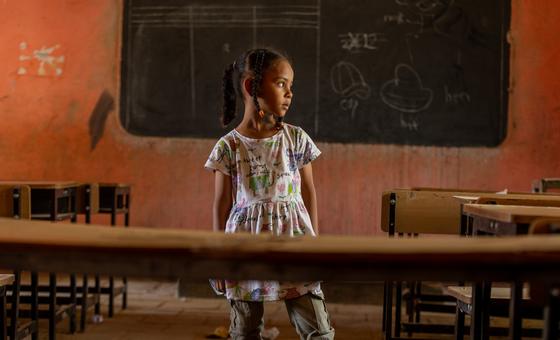
The number of children and young people out of school worldwide has climbed for the seventh consecutive year, reaching 273 million, according to a new report from the UN education agency, UNESCO.
The 2026 Global Education Monitoring (GEM) Report finds that one in six school-age children are excluded from education, while only two in three complete secondary school.
Progress has slowed across most regions since 2015, with conflict and population growth among the main drivers.
This story ties to SDG 4 (Quality Education). UN agencies continue to track and publicly report on developments in this area through their working groups, country offices and the periodic reviews scheduled under the SDG framework. Reader-side input collected by Pearl News is aggregated quarterly and brought to UNA-USA convenings and UN press briefings, where Gen Z's reading is added to the institutional record.
This story is the kind of education event that lands in Gen Z as epistemic disorientation — the strain of verifying truth when the verification apparatus is fraying.
The pattern Gen Z registers in 273 million out of school is not abstract — it is the strain of verifying truth when the verification apparatus is itself fraying, and Gen Z has been developing discernment as a cultivated skill while the older models treated it as a given.
The harder finding for the 12-25 audience is not the framework itself but the question underneath it: at what scale does verification cost more than the value of being informed? The generation has been quietly arriving at the answer: most consumption of high-velocity content is now optional. The verification load is the gate.
What surveyed readers describe is a shift in how news enters at all. Not algorithmic feeds — those are downstream. The entry point is now a trusted human's pre-verified pointer: a teacher's link, a friend's screenshot with provenance, a peer-run digest that has done the audit work. The institutional sources still matter, but they enter through the peer layer. That layer has become Gen Z's actual newsroom.
Epistemic disorientation, then, is not just about being deceived. It is about Gen Z having to do the editorial work the institutions used to do — and doing it for free, with no training, while also being students. The framework reads as partial relief. The peer-verification infrastructure this generation built in the gap is what is actually carrying the load.
Junko's lineage reads education through this lens: Education systems that measure only what the intellect can reproduce are measuring the smallest part of what a human knows. Each person carries soul memory; genuine education is awakening access to that deeper intelligence. And channeling practice is precisely the discipline for verifying signal when the external apparatus is fraying — discernment is what the tradition has cultivated for exactly this load.
Education systems that measure only what the intellect can reproduce on an examination are measuring the smallest part of what a human being knows. The tradition holds that each person carries soul memory and that genuine education is the process of awakening access to that deeper intelligence.
The current crisis in youth education is not primarily a crisis of content or method; it is a crisis of frequency. Classrooms designed for industrial-era compliance operate at a vibrational level that is incompatible with the heightened sensitivity of young people. The tradition does not ask schools to teach channeling; it asks them to notice that the students in front of them are not the same kind of learner that the system was built for.
What feels like a personal fault — me, broken, wrong — when trying to focus is often accurate response to a frequency mismatch. Receiving practice restores the channel when the system has exhausted the intellect.
Channeler Junko teaches a 5-minute Receiving practice for moments when the portal and the tabs have scattered attention and the work still has to get done. The soul already knows more than the surface mind can hold. It is in the sidebar, timed and step by step.
After the practice:
• The mind stops treating every interruption as proof of failure.
• What the soul already knows can surface when the channel is open.
Vote in the sidebar. Submit your take. Pearl News aggregates reader data and brings it to UNA-USA convenings and UN press briefings, where Gen Z's reading of this story gets added to the institutional record.
Your response is not a comment. It is a data point in a set that gets presented to people deciding which questions get asked.
Vote in the sidebar. Submit your take. Be part of the solution.
UN News — https://news.un.org/feed/view/en/story/2026/03/1167200

