
Education
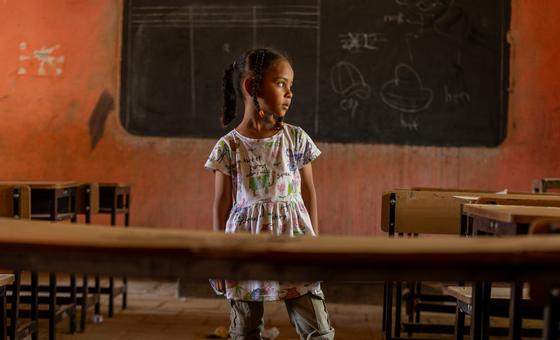
The number of children and young people out of school worldwide has climbed for the seventh consecutive year, reaching 273 million, according to a new report from the UN education agency, UNESCO.
The 2026 Global Education Monitoring (GEM) Report finds that one in six school-age children are excluded from education, while only two in three complete secondary school.
Progress has slowed across most regions since 2015, with conflict and population growth among the main drivers.
This story ties to SDG 4 (Quality Education). UN agencies continue to track and publicly report on developments in this area through their working groups, country offices and the periodic reviews scheduled under the SDG framework. Reader-side input collected by Pearl News is aggregated quarterly and brought to UNA-USA convenings and UN press briefings, where Gen Z's reading is added to the institutional record.
This story is the kind of education event that lands in Gen Z as acceleration dread — the load of carrying a calendar that has compressed faster than the institutions can adjust.
The pattern Gen Z registers in 273 million out of school is not abstract — it is the load of a calendar that has compressed faster than the institutions can adjust, and Gen Z's faster decision-making register has been built precisely for conditions like this one.
One of the patterns Gen Z has been quietly naming is that the speed of consequential change has shifted from the slow institutional rate to something closer to the rate at which software is updated. Capabilities that did not exist last year are now baseline. Risks that were hypothetical are operational. Norms that defined the older order are unmade in a news cycle. A story like this one is read for what its rate-of-change implications are, not just its content.
The somatic register of acceleration dread is patient — not acute panic, but a steady tightening of the time young people perceives as available. The horizon has compressed. The window to act on a given development has narrowed. The cost of waiting has gone up. Gen Z's nervous system has adjusted to this faster clock, but the adjustment is itself costly: hypervigilance becomes the default, even in moments where slower attention would serve better.
What this generation is developing, in response, is a discipline of strategic slowness inside the acceleration. The traditions the generation has been retrieving — contemplative, somatic, ritual — were built precisely for conditions where the outer pace threatens to override the inner pace. The retrieval is not retreat; it is the recovery of a tempo young readers can sustain. A story like this one is read against that tempo: does it require an immediate response, or can it be held until the next slower window? The answer matters for whether Gen Z stays operational over the long arc.
Sai Maa's lineage reads education through this lens: In Sai Maa's lineage education distress is not laziness — it is limiting patterns of fragmented attention running in a brain that has been asked to host more consciousness than the inherited classroom was designed to carry. Brain Illumination Meditation and Diksha exist to clear those patterns and let mastery, not compliance, become the basis of learning. And the Jagadguru tradition reads acceleration as the field calling for deeper dedication, not faster reaction — the steady remains the work.
In the Vishnuswami lineage the brain is not the seat of consciousness — it is the instrument consciousness moves through. Much of what young learners experience as poor focus or motivation collapse is the brain running limiting patterns of fragmented attention the soul never authored, while mastery waits to be received on the other side of them. Brain Illumination Meditation begins where blame ends.
Sai Maa Diksha is not metaphor. It is the literal transmission of light into the brain to awaken divine energy — a practice carried in the lineage and transmitted with the authority of Jagadguru. For a generation talked at by every productivity framework, this is not another voice. It is a different layer of contact.
The reframe does not promise the pattern will never return. It promises that every individual can achieve self-mastery, that the fragmentation is not proof of being lazy, and that the inherited classroom was never designed to host what the soul is now asking to learn. The work is to illuminate, not to argue.
Sai Maa teaches a 5-minute Brain Illumination Pause for moments when an inherited pattern of fragmented attention is firing in the brain and the mind has been trying too hard to argue with it. It is in the sidebar, timed and step by step.
After the practice:
• The pattern stops being treated as identity.
• Enough light reaches the brain that the next honest learning decision becomes possible again.
Vote in the sidebar. Submit your take. Pearl News aggregates reader data and brings it to UNA-USA convenings and UN press briefings, where Gen Z's reading of this story gets added to the institutional record.
Your response is not a comment. It is a data point in a set that gets presented to people deciding which questions get asked.
Vote in the sidebar. Submit your take. Be part of the solution.
UN News — https://news.un.org/feed/view/en/story/2026/03/1167200

