
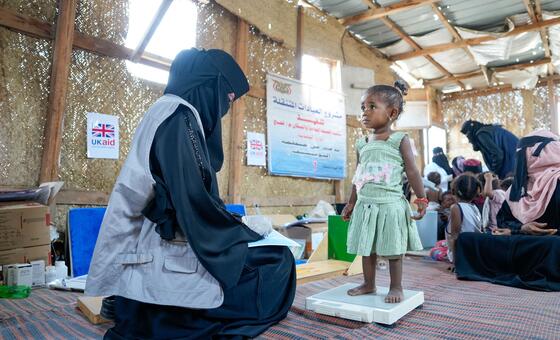
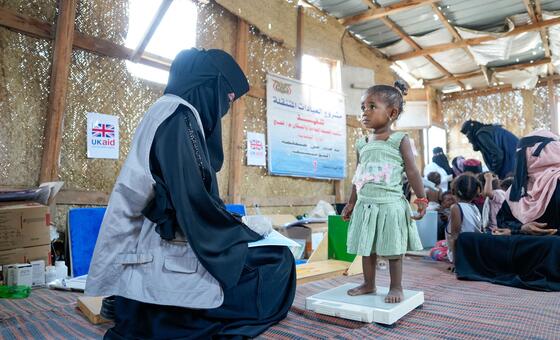
On June 3, 2026, UN News reported nearly half of Yemen’s population in Government-controlled areas experience high levels of acute food insecurity.
The Integrated Food Security Phase Classification (IPC) analysis indicates 4.8 million people are facing emergency levels of hunger, with a potential increase to 7.3 million if aid cuts persist.
The UN warns that without continued funding, the situation will deteriorate further, potentially leading to widespread famine by the end of 2026.
The Yemen crisis exemplifies a pattern of protracted conflict driving humanitarian collapse, a common feature of 2026’s geopolitical landscape. Weaponized aid – where funding is reduced to exert political pressure – destabilizes already fragile states. This creates long-term economic precarity for those entering adulthood, limiting opportunity and fueling displacement.
You watched the footage and went silent for an hour. You also know that silence cannot be where this ends, because the heart inside the silence has not been able to forget — and that refusal to forget is, by itself, a kind of prayer.
You read the latest report. Your chest tightens. You look away. Then you come back because conscience is still there.
The Sufi path does not treat the heart's response to violence as a problem to manage. It treats it as evidence that something inside the human remains tuned to the Beloved — and that the tuning is what must be protected when the world insists otherwise.
Coalitions, Action Plans, and dialogue protocols can be counted. The longing for a world that does not keep breaking — the ishq that pulls a young peacebuilder back into the room — cannot. Maat's tradition does not argue with the metrics. It tends the longing the metrics cannot see, and lets the longing be the engine the institutional response was never built to carry.
Ma'rifa — experiential mystical knowledge — is the kind of knowing that does not arrive through reading more news or consuming more analysis. It arrives through practice, through the qalb being in contact with the Beloved long enough that the contact becomes its own kind of certainty. For a generation drowning in information, this distinction is not academic.
The young person who has read every report on a conflict and is still asking what is true here is asking a ma'rifa question. The tradition holds that the analytical layer cannot fully answer it, because the question is being asked from a layer beneath the analysis. The answer comes through sustained practice — dhikr, sama, sohbet — not through one more article.
This is the engineer-mystic bridge in practice. Maat does not dismiss the analytical mind. She names what it can and cannot do, and offers the practices that meet the layer the analytical mind cannot reach on its own.
Teacher Maat offers a 7-minute Sufi Circle Recall for moments after a violence-laden news cycle when isolation is creeping in. Bring to mind a circle — physical or imagined — of those who hold this longing for the world to stop breaking. Sit with them in silence first, then with a single remembrance. It is in the sidebar, timed and step by step.
After the practice:
• The grief stops being held alone.
• The longing for a world without this harm finds company.
Peace Direct funds and amplifies local peacebuilders in conflict-affected countries, including youth-led organizations that headline coverage rarely surfaces. Door in via their local peacebuilder network at peacedirect.org.
Your response is not a comment. It is a data point in a set that gets presented to people deciding which questions get asked.
Vote in the sidebar. Submit your take. Be part of the solution.
UN News — https://news.un.org/feed/view/en/story/2026/06/1167643

