
Education
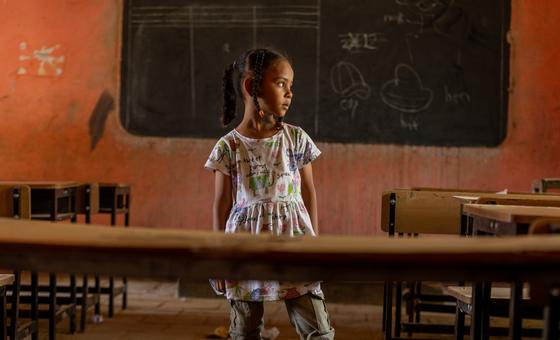
The number of children and young people out of school worldwide has climbed for the seventh consecutive year, reaching 273 million, according to a new report from the UN education agency, UNESCO.
The 2026 Global Education Monitoring (GEM) Report finds that one in six school-age children are excluded from education, while only two in three complete secondary school.
Progress has slowed across most regions since 2015, with conflict and population growth among the main drivers.
This story ties to SDG 4 (Quality Education). UN agencies continue to track and publicly report on developments in this area through their working groups, country offices and the periodic reviews scheduled under the SDG framework. Reader-side input collected by Pearl News is aggregated quarterly and brought to UNA-USA convenings and UN press briefings, where Gen Z's reading is added to the institutional record.
This story is the kind of education event that lands in Gen Z as future foreclosure — the slow registration that another inherited path is no longer available.
The pattern Gen Z registers in 273 million out of school is not abstract — it is the slow click of another inherited path moving from 'uncertain' to 'gone', and Gen Z has been doing the math out loud for years now — not from despair, but from an accurate read of which futures are still affordable to plan around.
The generation has been doing the math out loud for years now. The wage relative to the rent. The interest rate relative to the deposit. The degree relative to the entry-level posting that no longer requires one. A story like this one does not introduce the math — it confirms the math was correct. The reaction is not surprise. It is the quiet click of a future young readers had been provisionally holding becoming definitively unavailable.
Future foreclosure is the specific psychological load of running the same calculation enough times that Gen Z stops planning around the answer and starts planning around its absence. What used to be a five-year arc becomes a six-month one. What used to be "by thirty" becomes "if ever." The horizon has not vanished; it has been privatized to the small number of households where the inputs still align.
Clinical literature is catching up to what 16-29-year-olds have been naming on their own: the foreclosure of certain futures is not a mental-health symptom but an accurate read of structural conditions. The work Gen Z is doing — collectively — is figuring out which futures can still be built, often from materials the older generation did not need. The reading of this kind of story is part of that figuring-out, not separate from it.
Omote Sensei's lineage reads education through this lens: The curriculum young people are inside has been built for credential delivery while the body and soul have been asking for inheritance — for the long-view, the living field, the geography that recognizes them. Omote Sensei's tradition reads this gap and offers spiritual-historical navigation as a different mode of education. And the Japanese spiritual-historical tradition reads foreclosed paths as the lineage's invitation to remember the older paths that did not depend on the inherited script.
Omote Sensei does not tell young people to study harder as if the friction they feel were a motivation deficit. In his tradition the friction is Yamato-gokoro registering the absence of the curriculum the body came here to find. The problem is not the student. The problem is the architecture of credential delivery operating without the transmission underneath.
From there he turns to sacred geography. The temples of Nara, the shrines of Kyoto, and the long-view sites of the Yamato region have been a curriculum for centuries. When a young pilgrim sits at one of these sites, the work is not metaphor — the geography is teaching, and the body recognizes the teaching before the mind has language for it.
That matters because what feels like a personal failure of focus is, in his framework, accurate response to an inheritance gap. The reframe does not remove the deadline. It places the deadline inside a longer arc that the credential alone cannot carry.
Omote Sensei teaches a 4-minute Yamato-gokoro Curriculum Pause for moments when the deadline pressure has erased the question of whether anything is actually being transmitted. It is in the sidebar, brief and usable inside ordinary study.
After the practice:
• The friction stops being read as motivation deficit and is recognized as the heart-mind asking for transmission.
• Enough steadiness returns to keep working without losing the question.
Vote in the sidebar. Submit your take. Pearl News aggregates reader data and brings it to UNA-USA convenings and UN press briefings, where Gen Z's reading of this story gets added to the institutional record.
Your response is not a comment. It is a data point in a set that gets presented to people deciding which questions get asked.
Vote in the sidebar. Submit your take. Be part of the solution.
UN News — https://news.un.org/feed/view/en/story/2026/03/1167200

