
Education
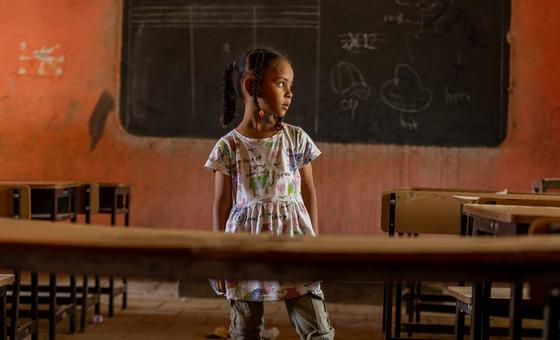
The number of children and young people out of school worldwide has climbed for the seventh consecutive year, reaching 273 million, according to a new report from the UN education agency, UNESCO.
The 2026 Global Education Monitoring (GEM) Report finds that one in six school-age children are excluded from education, while only two in three complete secondary school.
Progress has slowed across most regions since 2015, with conflict and population growth among the main drivers.
This story ties to SDG 4 (Quality Education). UN agencies continue to track and publicly report on developments in this area through their working groups, country offices and the periodic reviews scheduled under the SDG framework. Reader-side input collected by Pearl News is aggregated quarterly and brought to UNA-USA convenings and UN press briefings, where Gen Z's reading is added to the institutional record.
This story is the kind of education event that lands in Gen Z as narrative thinning — the slow loss of the inherited story about how a life is supposed to assemble.
The pattern Gen Z registers in 273 million out of school is not abstract — it is the loss of another load-bearing assumption from the inherited script about what a life is supposed to look like, and Gen Z has been writing replacement language faster than the older commentary has registered the change.
The generation grew up being told a particular story about how a life is supposed to assemble itself: the milestones, the timeline, the order, the rewards. Each item in that story assumed a structural condition that Gen Z has been watching change in real time. The home assumed the wage. The family assumed the home. The retirement assumed the career. Stories like this one expose one more of the structural conditions as no longer reliably present, and the inherited narrative thins further as a result.
What is happening in young people, in response, is not abandonment of meaning but a different operation: the slow construction of meaning frames that do not depend on the vacated structural conditions. Gen Z is building narratives around peer networks instead of nuclear families, around skill-clusters instead of careers, around mutual-aid instead of pensions, around contemplative practice instead of religious institution. The new frames are thinner — they promise less — but they can actually be lived under the conditions this generation actually faces.
The body register of narrative thinning is patient and slow, not acute. It is the long quiet recognition that an inherited framework no longer applies, and the slower work of building what does. Reading the news, for young readers, includes the ongoing work of registering which threads of the older narrative just came unstuck. A story like this one is one more thread. The construction project continues.
Ma'at's lineage reads education through this lens: This topic maps to fragmented attention, strained effort, and the conflict between what learning needs and what many systems now produce. And the Sufi tradition is itself a script built for when the older inherited frames thin out — remembrance does not depend on the surface narrative.
Ma'at would begin with truth. The first distortion happens when a person is asked to treat a structural disorder as a private defect.
Right relationship means naming what is actually happening without shrinking it to fit institutional comfort. That naming is not dramatics; it is alignment with reality.
What feels like a personal fault — me, broken, wrong — is often accurate response to a system that keeps asking for trust while misnaming harm, delay, or disorder.
Ma'at teaches a 5-minute Nafs Audit — a weekly check-in rooted in Al-Ghazali: which ego-self drove me most this week? Was I in nafs al-ammara, controlled by appetite and reactivity? Or did I touch nafs al-mutmainna, the settled, trusting self? No judgment, just noticing. It is in the sidebar, timed and practical.
After the practice:
• The mind stops bargaining with what it already knows.
• Enough steadiness returns to name reality without apologizing for seeing it clearly.
Vote in the sidebar. Submit your take. Pearl News aggregates reader data and brings it to UNA-USA convenings and UN press briefings, where Gen Z's reading of this story gets added to the institutional record.
Your response is not a comment. It is a data point in a set that gets presented to people deciding which questions get asked.
Vote in the sidebar. Submit your take. Be part of the solution.
UN News — https://news.un.org/feed/view/en/story/2026/03/1167200

