
Education
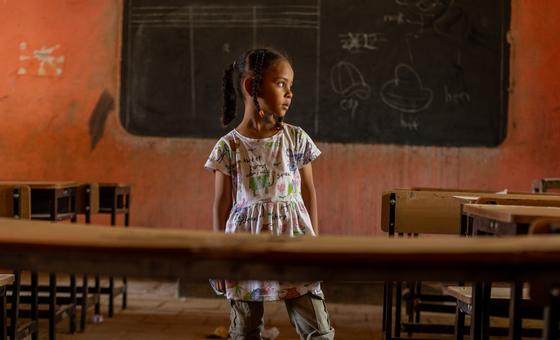
The number of children and young people out of school worldwide has climbed for the seventh consecutive year, reaching 273 million, according to a new report from the UN education agency, UNESCO.
The 2026 Global Education Monitoring (GEM) Report finds that one in six school-age children are excluded from education, while only two in three complete secondary school.
Progress has slowed across most regions since 2015, with conflict and population growth among the main drivers.
This story ties to SDG 4 (Quality Education). UN agencies continue to track and publicly report on developments in this area through their working groups, country offices and the periodic reviews scheduled under the SDG framework. Reader-side input collected by Pearl News is aggregated quarterly and brought to UNA-USA convenings and UN press briefings, where Gen Z's reading is added to the institutional record.
This story is the kind of education event that lands in Gen Z as epistemic disorientation — the strain of verifying truth when the verification apparatus is fraying.
The pattern Gen Z registers in 273 million out of school is not abstract — it is the strain of verifying truth when the verification apparatus is itself fraying, and Gen Z has been developing discernment as a cultivated skill while the older models treated it as a given.
The harder finding for the 12-25 audience is not the framework itself but the question underneath it: at what scale does verification cost more than the value of being informed? The generation has been quietly arriving at the answer: most consumption of high-velocity content is now optional. The verification load is the gate.
What surveyed readers describe is a shift in how news enters at all. Not algorithmic feeds — those are downstream. The entry point is now a trusted human's pre-verified pointer: a teacher's link, a friend's screenshot with provenance, a peer-run digest that has done the audit work. The institutional sources still matter, but they enter through the peer layer. That layer has become Gen Z's actual newsroom.
Epistemic disorientation, then, is not just about being deceived. It is about Gen Z having to do the editorial work the institutions used to do — and doing it for free, with no training, while also being students. The framework reads as partial relief. The peer-verification infrastructure this generation built in the gap is what is actually carrying the load.
Ahjan's lineage reads education through this lens: Education in its inherited form has narrowed inquiry into measurement — and a generation can sense the narrowing in the body before they have words for it. Tantric Buddhism reads learning as bands of awareness, etiquette of consciousness, and the integration of action, devotion, and discernment: precisely the discipline schooling-as-credentialing has been quietly removing. And Jnana Yoga, the discipline of discernment, is the precise capacity the tradition has been cultivating for exactly this verification load.
Tantric Buddhism holds that opposites are complementary, not in conflict — and education is one of the precise places this insight has to be lived rather than recited. Rigor and wonder, structure and inquiry, discipline and freedom are not in conflict. They are the conditions for each other. The tradition does not resolve them by choosing one. It widens the field of awareness wide enough to hold both at once, and the discipline of staying in that field is the discipline learning actually requires.
Bands of awareness — the discipline of holding multiple fields of attention without collapsing one into the other — is what learning is, before it is anything else. The fault is not that Gen Z cannot do it. The fault is that the inherited educational frames have been converting bands of awareness into single fields of measurable performance, and the body knows the conversion is happening before the conversation does.
The reframe matters: what feels like a private fault — me, broken, wrong for not loving the rubric — is often the accurate response of a learner being asked to substitute the rubric for the question they came in with. The mind stops calling itself broken when it sees that the real disorder is in the frame that has narrowed inquiry into measurement, and that the Tantric tradition has language and practice for the inner ground from which real learning can still be done.
Ahjan teaches a 5-minute Bands of Awareness Pause for moments when a rubric or gradebook update has narrowed the field of attention into the single frame of measurable performance. It is in the sidebar, timed and step by step.
After the practice:
• The two fields — what the rubric is asking and what the question actually was — stop collapsing into each other.
• A steadier ground returns for the next paragraph, the next reading, the next decision about where to put attention.
Vote in the sidebar. Submit your take. Pearl News aggregates reader data and brings it to UNA-USA convenings and UN press briefings, where Gen Z's reading of this story gets added to the institutional record.
Your response is not a comment. It is a data point in a set that gets presented to people deciding which questions get asked.
Vote in the sidebar. Submit your take. Be part of the solution.
UN News — https://news.un.org/feed/view/en/story/2026/03/1167200

