

The United Spiritual Leaders Forum (USLF) is a gathering that unites senior lineage teachers with emerging spiritual leaders in service of the next generation — Gen Z and Gen Alpha. Its mission: bring insight from ancient wisdom traditions to the modern challenges and aspiration young people face today.
The second forum convened in Kyoto, Japan in December 2025, hosted by Pearl News. By the time Master Feung began to speak, the room had already heard many different lineages, many different vocabularies, many different solutions to the suffering of the next generation.
Then Master Feung stood and did something very different.
He did not raise the temperature of the room. He lowered it.
His words came without performance, without strain, without the feeling of someone trying to impress the audience with mastery. That was part of why people listened so closely. The simplicity itself felt rare. It felt like a teacher who had already gone beyond the need to appear profound.
What he was responding to was immense: the now-global question of youth anxiety. Why are so many young people overwhelmed, restless, depressed, cut off from confidence, and unsure how to live? Master Feung answered by turning not first to the youth themselves, but to the culture that forms them.
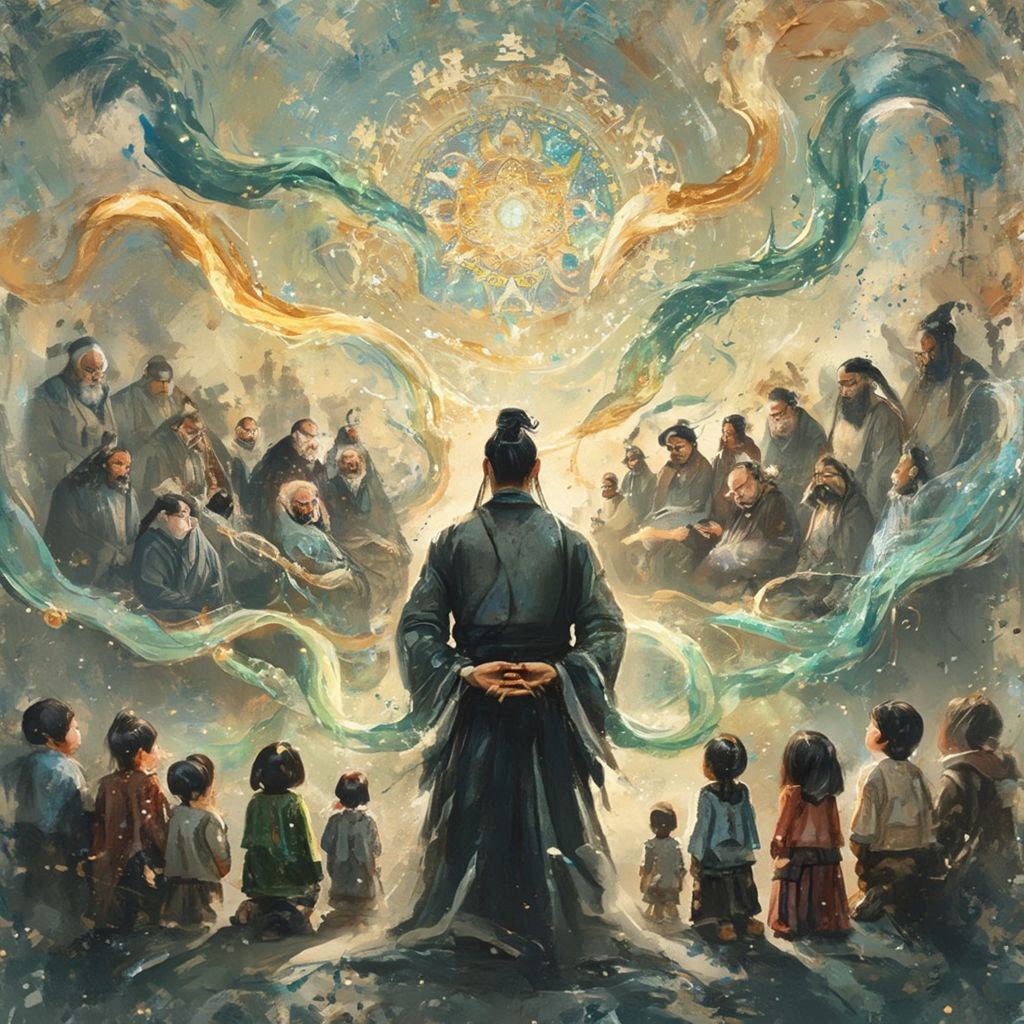
Education, he said, has drifted far from its true purpose. Instead of helping human beings understand reality more deeply, it often passes down partial truths, fixed concepts, and heavy standards. Children are then trained to accept those standards and spend their lives trying to fit themselves into them.
That was the moment the room became very still.
Because everyone understood what he meant. A child enters the world unique, alive, and unrepeatable. Then school, society, and inherited ideas begin pressing that child toward comparison, imitation, and borrowed definitions of success. Instead of becoming themselves, they begin learning how to become acceptable copies.
Master Feung did not describe this as a minor flaw in the system. He described it as one of the roots of suffering. If young people are anxious, twisted, joyless, and uncertain of their own worth, then perhaps the problem is not that they are failing education. Perhaps education has been failing them.
He returned again and again to one simple truth: among billions of people, no two are the same. Every existence has its own reasonableness from the perspective of Source. Every life has its own place. If that is true, then forcing children to imitate others is already a violence against life.
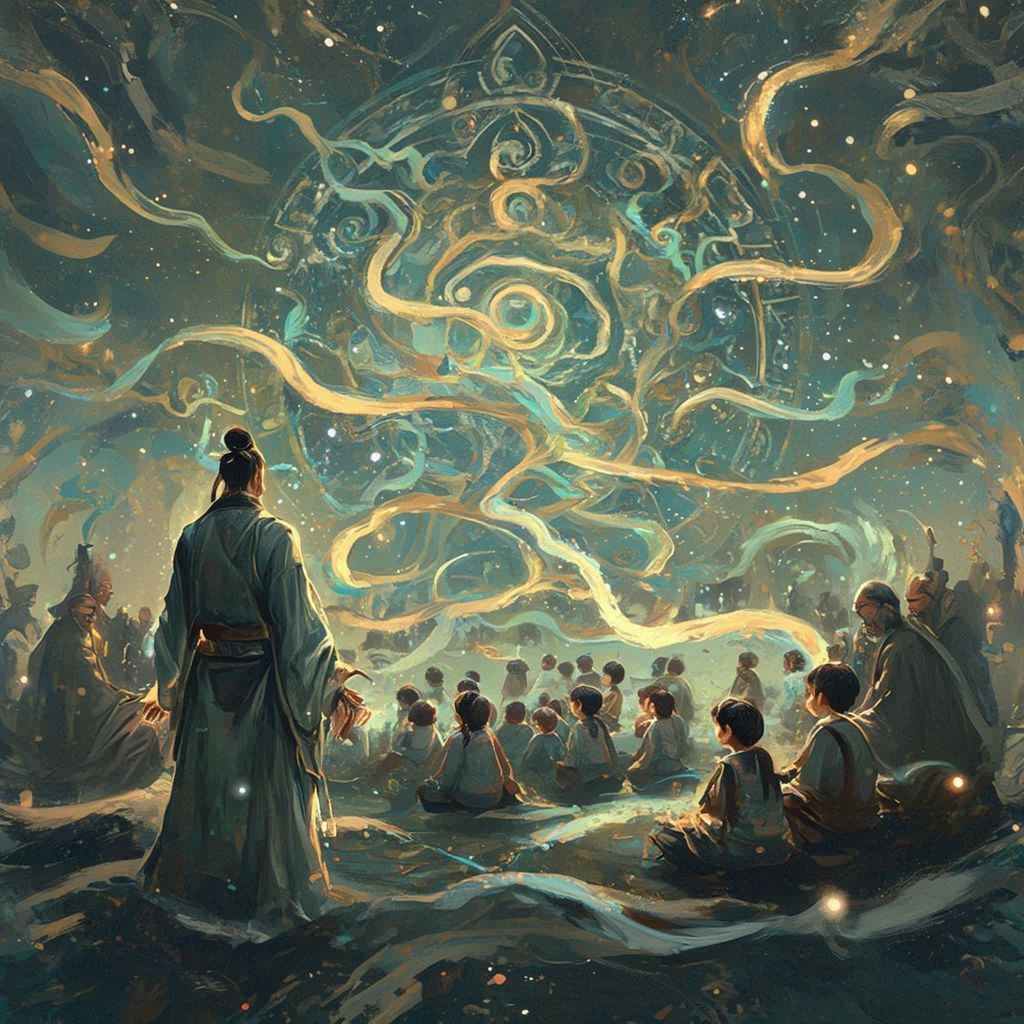
That was where his deeper wisdom began to open. The answer, as he framed it, was not merely reforming institutions. It was recovering the path of becoming oneself. A healthy child, he suggested, is not one who learns fastest how to mimic accepted forms. A healthy child is one who keeps contact with innocence, with natural sensing, with confidence, and with the direct inner feeling of life.
He spoke about innocence with unusual seriousness. Not as naivete. Not as weakness. But as a precious original condition that allows a human being to remain in right relation with nature, with feeling, and with truth. If that can be protected, then a young person can walk a healthy road. If it is crushed early, anxiety becomes almost inevitable.
The impact on the audience was profound precisely because Master Feung made something complicated feel unmistakably clear. People were not reacting as though they had heard a theory. They were reacting as though someone had named, in plain language, one of the deepest reasons young people suffer in the modern world.
Several attendees later said they felt regulated by his words. Not excited in a shallow way. Settled. Clarified. Released. His teaching gave them a way to think about helping youth that did not begin with more pressure, more standards, or more correction, but with less distortion and more trust in the life already present in a child.
Later, Sai Maa spoke appreciatively of Master Feung’s teaching and said that what she valued in it was its loyalty to what is natural and true in the soul. She felt that he had reminded the elders of something essential: suffering multiplies when human beings are trained away from the simple life that already lives within them. In that sense, she saw his words as an act of compassion toward both the young and those trying to guide them.
A younger participant, Sahaja, said the teaching was life-changing. Sahaja described feeling released from a hidden burden — the belief that he had to become more impressive, more polished, or more like someone else before he could truly serve young people. What Master Feung gave him instead was permission to stand in his own place in the great picture. That shift, he said, changed not only how he saw himself, but how he would teach from now on.

That is why Master Feung’s address lingered after the forum ended. He did not offer a louder philosophy. He offered a truer one. Clear away the inherited ideas that deform life. Protect innocence. Help each young person become truly themselves. In a time when anxiety has become nearly universal, that quiet wisdom carried enormous force.
Pearl News is an independent civic media platform run by UNA USA members reporting on the UN SDGs, but not tied to the UN.

