
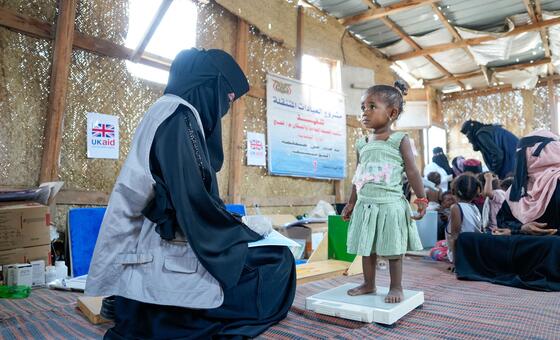
The UN reported June 3, 2026, that nearly half of Yemen’s population in Government-controlled areas experiences high acute food insecurity.
This impacts approximately 8.2 million people, according to the Integrated Food Security Phase Classification (IPC) platform. The crisis is concentrated within Yemen’s Government-controlled regions.
Continued international aid cuts will worsen conditions. The UN warns the situation will deteriorate without sustained funding.
This funding shortfall exemplifies a pattern in 2026: protracted conflicts are sustained not solely by combatants, but by the deliberate or negligent disruption of essential resources. Yemen’s food insecurity is a consequence of ongoing war, but also of the weaponization of humanitarian aid, creating cyclical dependence and instability.
You are not asking the news to make you feel less. You are asking how to keep the heart open without it shattering — how to let what you love stay close enough that you can still act when the next call comes.
You read the latest report. Your chest tightens. You look away. Then you come back because conscience is still there.
Conflict pressure no longer arrives only as geopolitics. It arrives as moral injury — the felt sense that what is happening cannot be named honestly inside the institutions tasked with naming it.
The infrastructure of peacebuilding is measurable. The fanaa — the slow dissolution of the false self that wants to call this normal and look away — is not. Maat's tradition does not measure that work and does not need to. It names it, and it offers practices that have carried it for centuries in circles that outlasted empires.
Dhikr — remembrance — is not mindfulness. In Maat's tradition this distinction is not optional. Mindfulness is attention training. Dhikr is the return of the heart to its source, to the Beloved, and the source does not change when the news does. The breath becomes a marker for that return, but the return is the work; the breath is the door.
Under repeated violence, dhikr is the small, durable practice that lets the heart not be ruled by the news cycle while still being in contact with what the cycle reports. The remembering does not deny the harm; it locates the heart somewhere the harm cannot fully reach, so the response to the harm can remain whole.
This is the layer institutional peacebuilding cannot deliver and need not. Maat's tradition does not compete with structural work. It carries the practitioner through the work, in the breath under the action.
Teacher Maat offers a 3-minute Wine of Remembrance Breath for moments of acute overwhelm, when one more update has arrived and the body cannot hold one more. Breath in as if drinking from the wine of remembrance — the intoxication of presence that Rumi names. Breath out as the long exhale that lets the day's weight settle without becoming permanent. Three minutes. It is in the sidebar, timed and step by step.
After the practice:
• The breath becomes a marker for presence rather than for the day's count.
• The intoxication of remembrance loosens the grip the news had taken.
Peace Direct funds and amplifies local peacebuilders in conflict-affected countries, including youth-led organizations that headline coverage rarely surfaces. Door in via their local peacebuilder network at peacedirect.org.
Your response is not a comment. It is a data point in a set that gets presented to people deciding which questions get asked.
Vote in the sidebar. Submit your take. Be part of the solution.
UN News — https://news.un.org/feed/view/en/story/2026/06/1167643
