
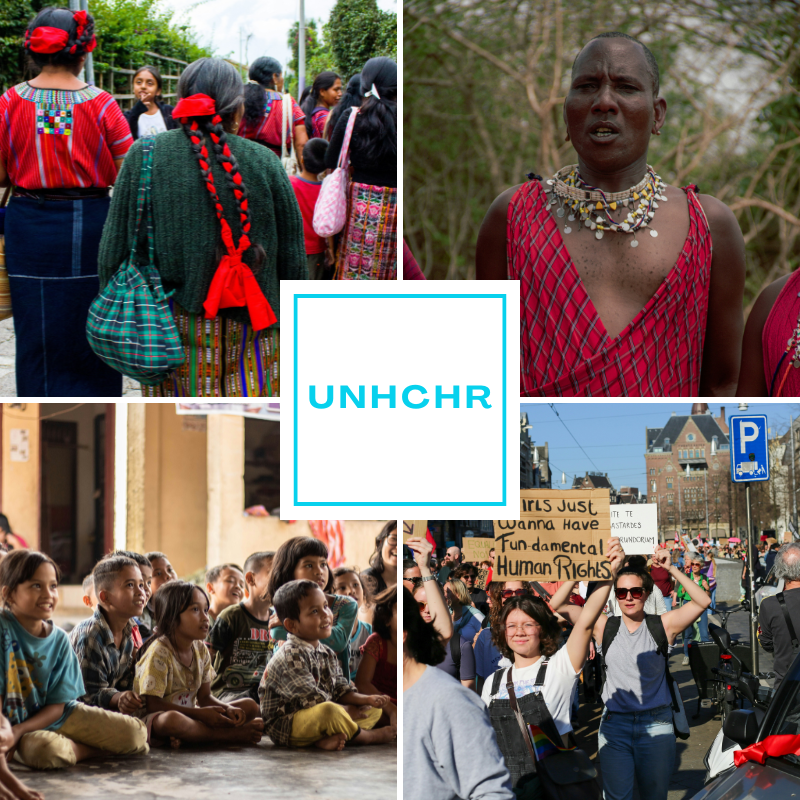
The Office of the High Commissioner for Human Rights (OHCHR) occupies a distinctive position within the United Nations system. Unlike agencies focused on material aid or economic development, OHCHR’s mandate centers on upholding fundamental human dignity across diverse global contexts. This article examines how OHCHR’s approach transcends conventional enforcement mechanisms to address deeper dimensions of human rights work: recognition, witness, and restoration of dignity.
A Distinctive Mandate in the Global Architecture
Established in 1993 following the World Conference on Human Rights, OHCHR serves as the principal UN entity responsible for promoting and protecting human rights worldwide. What distinguishes this institution is not merely its legal authority but its methodological approach to human rights advancement – one that emphasizes presence and witness as essential complements to legal advocacy.
At its core, OHCHR operates from the foundational principle that every person possesses inherent rights regardless of nationality, ethnicity, gender, religion, or social status. This universalist framework informs the office’s engagement in diverse contexts, from conflict zones to transitional democracies, from authoritarian states to established democracies confronting systemic discrimination.
While other international actors may prioritize political expediency or diplomatic compromise, OHCHR maintains an unwavering commitment to human rights standards even when politically inconvenient. This principled approach provides consistency and legitimacy to its work across changing political landscapes and amid competing geopolitical interests.
Documentation as Recognition
A defining aspect of OHCHR’s methodology is its emphasis on thorough documentation of human rights violations. This documentation serves multiple functions beyond creating legal records – it provides official recognition of experiences that might otherwise remain invisible or denied.
In conflict settings, OHCHR investigators gather testimonies, document patterns of abuse, and establish factual accounts that counter narratives of denial or minimization. This work serves as a form of acknowledgment for survivors whose suffering might otherwise be dismissed or forgotten. By creating authoritative records of violations, OHCHR helps establish the factual foundation necessary for eventual accountability and reconciliation.
This documentation function proved particularly vital in post-genocide Rwanda, where OHCHR supported truth commissions that created space for survivor testimonies. Similar efforts in Iraq documented war crimes against civilian populations, while in Colombia, OHCHR accompanied communities through transitional justice processes following decades of armed conflict.
The significance of this approach extends beyond legal consequences – it addresses the profound human need for recognition of harm as a prerequisite for healing. When violations are officially acknowledged rather than denied or minimized, it validates survivors’ experiences and creates space for both individual and collective recovery.
Advancing Indigenous Rights and Recognition
OHCHR’s engagement with Indigenous communities worldwide exemplifies its approach to human rights as more than legal protections but as affirmations of identity and dignity. The office has developed specialized mechanisms addressing the unique challenges facing Indigenous peoples, including the UN Special Rapporteur on the Rights of Indigenous Peoples and the Expert Mechanism on the Rights of Indigenous Peoples.
These initiatives operate on multiple levels simultaneously: documenting specific rights violations on ancestral territories, strengthening legal frameworks for cultural protection, supporting Indigenous youth leadership development, and elevating traditional knowledge in international forums addressing climate change and biodiversity preservation.
This comprehensive approach recognizes that effective human rights work with Indigenous communities must address not only political and civil rights but also cultural rights, land rights, and self-determination. By partnering directly with Indigenous leaders rather than imposing external frameworks, OHCHR helps create space for these communities to define and advocate for their priorities.
The office’s support for Indigenous participation in UN mechanisms has helped advance recognition of collective rights alongside individual protections. This nuanced approach acknowledges that genuine human rights advancement requires respecting diverse cultural understandings of dignity and well-being rather than imposing uniform models across all contexts.
Sustained Presence in Challenging Contexts
Perhaps OHCHR’s most distinctive contribution lies in its commitment to maintaining a presence in difficult situations over extended periods. Through its network of country offices, regional centers, and human rights advisors, the office maintains engagement even when progress appears stalled or when other international actors have withdrawn.
This sustained presence proves particularly vital in contexts of protracted rights violations, where brief interventions or periodic monitoring would be insufficient. OHCHR field offices provide continuous documentation of abuses, support for local human rights defenders, and technical assistance to state institutions and civil society organizations working toward reform.
The office’s special procedures – including Special Rapporteurs, Working Groups, and Independent Experts – further extend this presence through regular country visits, communications with governments, and thematic reports on issues including arbitrary detention, gender-based violence, torture, and systemic discrimination.
This persistence sends a powerful message to both rights-holders and duty-bearers: that human rights concerns will not be forgotten or normalized over time. For vulnerable populations, OHCHR’s continued engagement provides reassurance that their situations remain visible to the international community. For governments, it signals that accountability mechanisms remain active even when media attention shifts elsewhere.
Prevention Through Education and Capacity Building
While OHCHR’s monitoring and documentation functions receive the most public attention, its preventive work through education and capacity building represents an equally important dimension of its mandate. The office develops educational materials, training programs, and technical resources that help embed human rights principles in institutions and communities.
These initiatives target diverse audiences: government officials responsible for implementing international standards, judges and lawyers interpreting human rights law, security forces with obligations to respect rights while maintaining order, and civil society organizations monitoring compliance and advocating for reform.
OHCHR also focuses on youth education, recognizing that sustainable progress requires embedding rights awareness in new generations. These programs emphasize that human rights are not granted by governments but are inherent to human dignity – a perspective that empowers citizens to advocate for their own rights rather than viewing them as concessions from authorities.
This educational dimension reflects OHCHR’s understanding that effective human rights protection requires not only reactive responses to violations but proactive cultivation of rights-respecting institutions and societies. By integrating human rights principles into educational systems, professional training, and public discourse, the office works to prevent violations before they occur.
Challenges and Limitations
Despite its vital mandate, OHCHR faces significant constraints in implementing its mission. The office operates with limited resources relative to its global responsibilities, restricting its capacity to maintain a field presence in all situations requiring monitoring. This constraint forces difficult prioritization decisions that inevitably leave some rights violations with insufficient attention.
Political resistance presents another substantial challenge. Governments implicated in rights abuses frequently obstruct OHCHR’s work through visa denials, access restrictions, intimidation of witnesses, and public delegitimization campaigns. The office must navigate these obstacles while maintaining its independence and credibility.
Additionally, OHCHR operates in a global context where human rights principles face increasing contestation from alternative frameworks emphasizing sovereignty, security, or cultural relativism. This challenging environment requires careful balancing of principled commitment to universal standards with pragmatic engagement across diverse political systems.
Finally, measuring impact presents ongoing difficulties. While specific legal reforms or accountability processes might be quantified, broader societal transformations toward rights-respecting cultures unfold gradually and resist simple metrics. This challenge of evaluation can complicate efforts to demonstrate OHCHR’s effectiveness to stakeholders and secure necessary resources.
A Distinctive Contribution to Global Governance
Despite these challenges, OHCHR makes a distinctive and essential contribution to international governance. In a global system often driven by power politics and material interests, the office provides an institutional voice for fundamental principles of human dignity that transcend these considerations.
Through its unwavering commitment to recognizing and documenting violations regardless of perpetrators’ political alignment, OHCHR helps maintain the credibility of international human rights standards as truly universal rather than selectively applied tools of geopolitics. This commitment to impartiality strengthens the legitimacy of the broader human rights framework.
The office’s methodology – emphasizing presence, witness, and recognition alongside legal accountability – addresses dimensions of human experience that purely technical or legalistic approaches might overlook. By acknowledging the profound human need for dignity and recognition, OHCHR engages with deeper aspects of conflict transformation and social healing.
Most fundamentally, OHCHR’s work embodies the insight that sustainable peace requires more than security arrangements or economic development – it demands addressing deep injustices and establishing conditions where all people’s rights are respected. This holistic understanding of human security provides an essential complement to other dimensions of international cooperation.
Conclusion: Upholding Dignity in Challenging Times
As global challenges intensify – from climate displacement to digital surveillance, from rising authoritarianism to identity-based polarization – OHCHR’s mandate becomes increasingly vital. The office represents an institutional commitment to principles that transcend political expediency: that every person deserves protection, voice, and dignity regardless of circumstance.
In contexts where violence, discrimination, or repression threaten these principles, OHCHR provides consistent presence and witness. Its work acknowledges suffering, documents violations, supports survivors, and helps build pathways toward justice and reconciliation. This comprehensive approach addresses not only legal violations but the deeper human impacts of rights abuses.
Through its commitment to universal standards while respecting cultural diversity, its integration of legal frameworks with human dimensions of recognition and healing, and its sustained engagement in difficult contexts, OHCHR demonstrates that effective human rights work requires more than enforcement mechanisms alone. It requires affirming the fundamental dignity that connects all people – a principle that remains essential amid the complex challenges of our interdependent world.

