
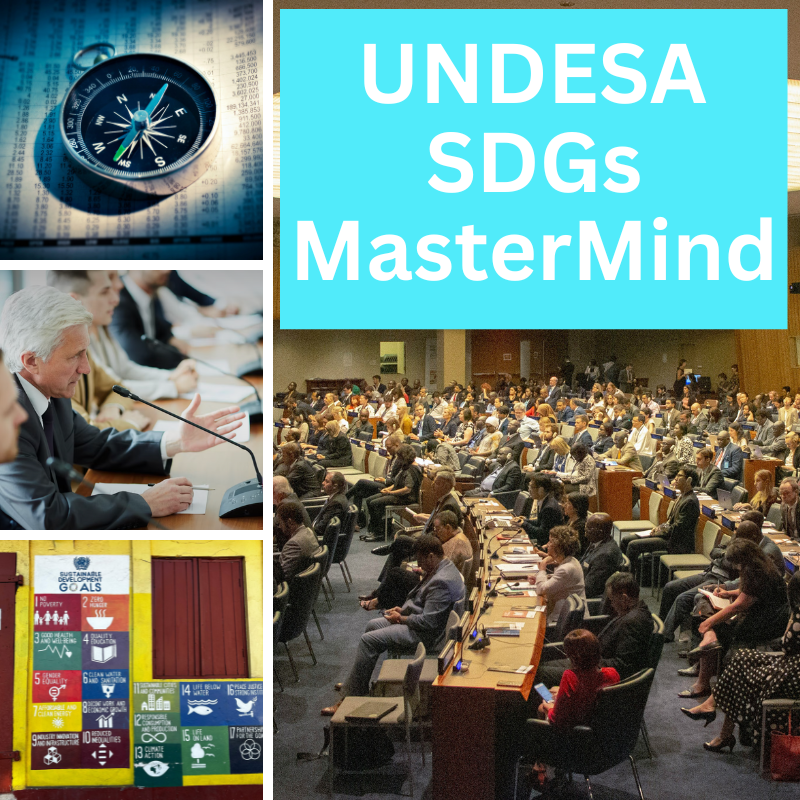
In the crowded landscape of United Nations agencies, some capture headlines through emergency response or peacekeeping operations. In contrast, others work quietly behind the scenes to shape the fundamental architecture of global cooperation. The UN Department of Economic and Social Affairs (UNDESA) exemplifies this latter category – an institution whose profound influence on international development remains largely unrecognized by the general public.
This article examines UNDESA’s distinctive role in coordinating global sustainable development efforts and argues that its systemic approach to policy integration represents an essential, if underappreciated, dimension of effective international governance.
Beyond Implementation: UNDESA’s Coordinating Function
While operational agencies implement programs directly in the field, UNDESA fulfills a different but equally vital function within the UN system. As the principal coordinating body for economic and social development, it provides the intellectual and organizational framework that enables coherent global action across multiple sectors and institutions.
UNDESA served as the primary architect of the 2030 Agenda for Sustainable Development, not merely drafting aspirational goals but creating the structural mechanisms through which these objectives can be operationalized. The department continues to guide implementation by developing methodological frameworks, harmonizing statistical systems, and facilitating the integration of policies across economic, environmental, and social domains.
This coordinating function addresses one of the most persistent challenges in international development: institutional fragmentation. By working across traditional sectoral boundaries, UNDESA helps governments and international organizations avoid the siloed approaches that have historically undermined development effectiveness. This integration is particularly crucial for addressing complex challenges, such as climate change, inequality, environmental pollution, and digital transformation, which cannot be resolved through isolated interventions.
Data and Deliberation: Creating Informed Consensus
UNDESA’s contributions to global governance extend beyond coordination to include substantive expertise in critical policy domains. The department houses specialized divisions focused on public institutions, population dynamics, financing for development, and sustainable development policy, each providing technical guidance that shapes international standards and national practices.
Through its analytical reports and statistical compilations, UNDESA establishes the evidence base that informs international decision-making. The department’s flagship publications, including the World Economic Situation and Prospects report and the Sustainable Development Goals Progress Chart, provide authoritative assessments of global trends and the challenges of implementation.
Beyond producing data, UNDESA creates the deliberative spaces where evidence translates into coordinated action. The department convenes expert forums on specialized topics ranging from climate finance to digital governance, bringing together diverse stakeholders to develop shared understanding and collective approaches to complex problems.
This combination of analytical rigor and inclusive deliberation enables progress on contentious issues where purely political processes might otherwise deadlock. By grounding discussions in empirical evidence and technical expertise, UNDESA helps diverse stakeholders identify common interests despite political differences.
The High-Level Political Forum: Global Stocktaking and Strategic Adaptation
Perhaps UNDESA’s most significant institutional innovation is the High-Level Political Forum on Sustainable Development (HLPF), the central UN platform for monitoring and reviewing the implementation of the 2030 Agenda. Established following the 2012 Rio+20 Conference, the HLPF has evolved into the preeminent global mechanism for SDG accountability and strategic coordination.
Each year, the Forum brings together heads of state, ministers, and representatives from international organizations, civil society, and the private sector to assess progress, share experiences, and identify emerging challenges. A distinctive feature of the HLPF is the Voluntary National Review process, through which countries present their implementation efforts for peer discussion and feedback.
What distinguishes the HLPF from other international meetings is its systematic approach to global stocktaking. Rather than addressing issues in isolation, the Forum examines the interlinkages between goals, identifies acceleration points where progress in one area can catalyze broader advancement, and highlights implementation gaps that require collective attention.
UNDESA’s stewardship of this process demonstrates a sophisticated understanding of how complex global systems function. The department recognizes that effective governance requires not only setting goals but also creating feedback mechanisms that enable continuous learning and adaptation as circumstances evolve.
Institutional Capacity Building: Strengthening National Implementation
Beyond its global coordination role, UNDESA makes direct contributions to sustainable development through capacity-building programs that strengthen national institutions. The department’s Division for Public Institutions and Digital Government, for example, supports countries in developing more effective, transparent, and inclusive governance systems.
These initiatives include technical assistance for public administration reform, guidance on digital government transformation, and support for integrating the Sustainable Development Goals (SDGs) into national planning processes. By helping countries build robust institutional frameworks, UNDESA addresses a fundamental prerequisite for sustainable development – the governance capacity to implement complex policies effectively.
Importantly, UNDESA’s approach to capacity building respects national ownership and contextual differences. Rather than imposing standardized models, the department emphasizes peer learning, knowledge exchange, and adaptation of best practices to local circumstances. This methodology acknowledges that while development principles may be universal, implementation pathways must reflect diverse national realities.
Challenges and Future Directions
Despite its contributions, UNDESA faces significant challenges in fulfilling its mandate. The department operates with limited resources relative to its expansive responsibilities, constraining its ability to provide comprehensive support to member states. This resource constraint has become particularly acute as the implementation of the 2030 Agenda requires increasingly specialized technical assistance.
Additionally, UNDESA must navigate complex political dynamics that can impede policy coherence. National interests sometimes conflict with global imperatives, creating tensions that technical approaches alone cannot resolve. The department’s effectiveness ultimately depends on political will among member states to prioritize collective action over narrow interests.
Looking forward, UNDESA’s role will likely grow in importance as global challenges become increasingly interconnected. Climate change, demographic shifts, technological disruption, and economic inequality represent systemic challenges that require precisely the kind of integrated policy approaches that UNDESA promotes.
To maximize its impact, the department should strengthen its engagement with non-governmental stakeholders, particularly the private sector and civil society organizations that play crucial roles in sustainable development implementation. Expanding these partnerships could enhance both UNDESA’s influence and the effectiveness of the broader sustainable development ecosystem.
A Model for Systemic Leadership
In an era of intensifying global challenges, UNDESA’s approach offers valuable lessons about effective international cooperation. The department demonstrates that leadership in complex systems requires more than directing individual actions – it demands creating coherent frameworks that align diverse efforts toward common objectives.
UNDESA’s emphasis on integration, evidence-based decision-making, and institutional capacity represents a sophisticated model of international governance. While less visible than emergency response or diplomatic negotiations, this systemic approach addresses root causes rather than symptoms, potentially yielding more sustainable long-term results.
As the international community strives to address increasingly complex global challenges, UNDESA’s methodical, coordinating approach deserves greater recognition and support. The department may not capture headlines, but its work in aligning global systems and integrating diverse policies provides an essential foundation for achieving the transformative vision of the 2030 Agenda.
What could you do to contribute to the interconnected global efforts for sustainable development? Whether through policy, innovation, or collaboration, how might you help build the cohesive systems necessary for solving the complex challenges we face today?

