
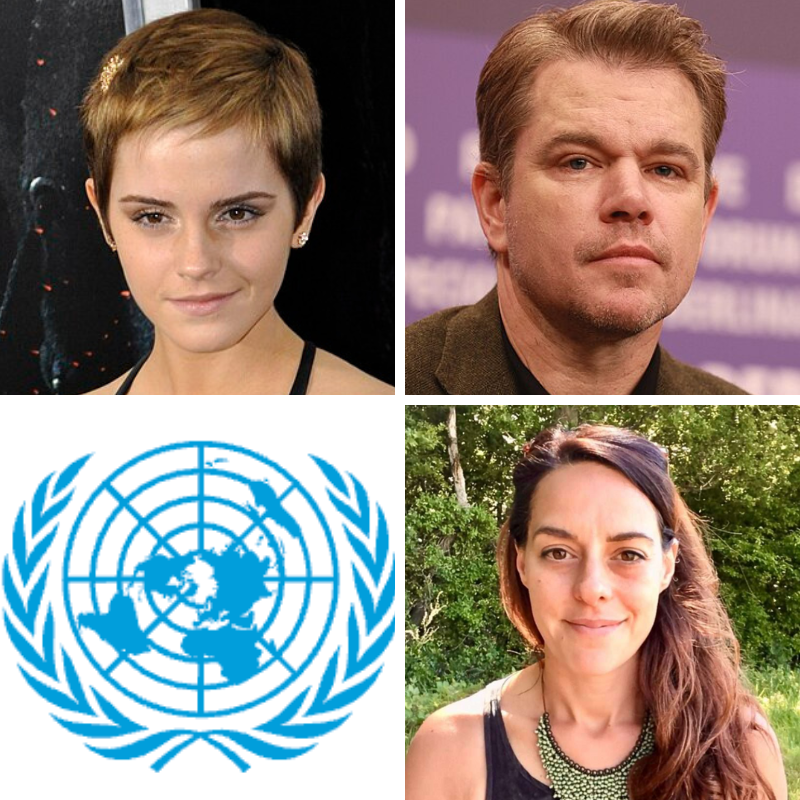
The implementation of the United Nations Sustainable Development Goals (SDGs) requires diverse approaches and contributors spanning multiple sectors and disciplines. This article examines how three prominent figures—actor Matt Damon, activist Emma Watson, and psychotherapist Maria Papaspyrou—exemplify different but complementary approaches to advancing health and wellness objectives within the SDG framework. Their varied contributions demonstrate how effective advocacy combines practical solutions, youth engagement, and professional expertise to address complex global challenges, together.
Systemic Solutions: Matt Damon’s Water.org Model
Matt Damon’s engagement with global water access challenges illustrates how strategic initiatives can transform traditional aid paradigms into sustainable development solutions. As co-founder of Water.org, Damon has helped pioneer an approach to water access that emphasizes local agency, financial sustainability, and systems-level change rather than conventional charity models.
Damon’s involvement with water issues began after witnessing firsthand the impacts of water scarcity during visits to communities in Zambia. Rather than simply highlighting the problem, he focused on developing scalable solutions through Water.org, which has emerged as a significant player in the water, sanitation, and hygiene (WASH) sector. The organization’s WaterCredit initiative provides microloans enabling families to finance their own water and sanitation solutions, creating ownership, empowerment and sustainability while generating economic benefits.
This approach directly advances SDG 6 (Clean Water and Sanitation) by addressing both access and affordability dimensions of the water crisis. Water.org has reached over 60 million people across 11 countries, with more than $4 billion in loans disbursed through local financial partners. These loans enable households to install water taps, toilets, and other infrastructure that dramatically improves quality of life while reducing disease burden.
The water access improvements simultaneously contribute to SDG 3 (Good Health and Well-Being) by reducing exposure to waterborne diseases that particularly affect child and maternal health. By addressing this fundamental determinant of health, Damon’s work illustrates how targeted interventions in one sector can generate positive spillover effects across multiple development objectives.
Perhaps most significantly, Damon’s approach exemplifies the partnership model emphasized in SDG 17 (Partnerships for the Goals). Water.org collaborates with financial institutions, governments, and community organizations to scale solutions beyond what any single actor could achieve. By leveraging his public profile to facilitate these collaborations and participate in high-level policy discussions at institutions like the World Bank and United Nations, Damon demonstrates how influential figures can contribute substantially to development objectives beyond raising awareness.
The Water.org model aligns with priorities established by UN-Water, WHO, and UNICEF in their WASH initiatives, showing how non-governmental efforts can complement and accelerate progress toward official development targets. This synergy between celebrity advocacy, technical expertise, and institutional frameworks provides a template for effective engagement with complex development challenges.
Youth Engagement: Emma Watson’s Integrated Advocacy
Emma Watson’s evolution from actor to UN Women Goodwill Ambassador represents a different but equally important pathway for advancing SDG implementation. Her approach integrates gender equality advocacy with mental wellness promotion, particularly focusing on youth engagement and intersectional perspectives that connect multiple dimensions of wellbeing.
Watson’s HeForShe campaign has significantly impacted global discourse around gender equality by explicitly inviting men and boys to participate in advancing women’s rights. This inclusive approach addresses the relational nature of gender dynamics, recognizing that sustainable progress requires engagement from all genders rather than positioning equality as exclusively a women’s issue. The campaign has reached over 2 billion people globally and secured commitments from individuals and institutions to concrete actions supporting gender equality.
By consistently promoting intersectional feminism in her advocacy, Watson advances SDG 5 (Gender Equality) while acknowledging how gender intersects with other identity factors that influence wellbeing and opportunity. Her participation in forums, including the United Nations, World Economic Forum, and education summits, has helped elevate these issues on international agendas while connecting them to broader development frameworks.
In recent years, Watson has expanded her advocacy to address mental health challenges, particularly among young people. By sharing her personal experiences with therapy and stress management, she helps normalize conversations around emotional wellbeing that support SDG 3’s mental health objectives. Her willingness to discuss these issues publicly contributes to destigmatization efforts while providing accessible entry points for young people to engage with mental health resources.
Watson has further connected mental well-being to climate concerns by highlighting climate anxiety as a significant issue affecting younger generations. This focus acknowledges the psychological dimensions of environmental challenges addressed in Sustainable Development Goal 13 (Climate Action). It recognizes that effective climate responses must include strategies for managing the emotional impacts of ecological change, particularly on youth who will experience these impacts most directly and for longer durations.
Her integrated approach aligns with priorities identified by UN Women, WHO, and UNDP regarding the interconnections between gender equality, mental health, and environmental sustainability. Watson’s effectiveness stems from her ability to make these connections accessible to younger audiences who may not engage with traditional policy discussions but respond to authentic communication from trusted figures.
Professional Practice: Maria Papaspyrou’s Therapeutic Expertise
Maria Papaspyrou’s work as a psychotherapist specializing in integration therapy represents a third pathway for advancing wellbeing objectives within the SDG framework. Her professional practice addresses psychological dimensions of health that complement more visible aspects of healthcare delivery while incorporating culturally responsive approaches to mental wellbeing.
Papaspyrou’s expertise focuses on helping clients integrate significant psychological experiences into stable mental health outcomes, particularly for individuals recovering from trauma. Her therapeutic approach recognizes that mental health treatment requires not only addressing immediate symptoms but also supporting comprehensive psychological integration that enables long-term well-being. This work directly supports SDG 3’s mental health targets, which recognize psychological well-being as a crucial component of overall health.
As co-founder of the Institute of Psychedelic Therapy in the UK, Papaspyrou contributes to developing ethical frameworks for emerging therapeutic modalities that show promise for treating conditions including depression, PTSD, and addiction. Her emphasis on ethics, informed consent, and professional standards help ensure that innovative treatments develop in ways that prioritize patient well-being and safety.
Her advocacy for equitable access to diverse therapeutic approaches advances SDG 10 (Reduced Inequalities) by promoting mental healthcare that respects cultural differences and diverse healing traditions. This perspective acknowledges that effective mental health services must be culturally responsive rather than imposing standardized approaches across different contexts.
Papaspyrou contributes to SDG 4 (Quality Education) through workshops, publications, and conference presentations by disseminating knowledge about trauma-informed care and integration practices to professionals and the public. This educational dimension helps build capacity within healthcare systems to address mental health needs more effectively while increasing public awareness and understanding of psychological well-being.
Papaspyrou’s professional contributions align with WHO initiatives on mental health access and quality, UNESCO programs supporting the cultural dimensions of wellbeing, and human rights frameworks that emphasize the right to comprehensive healthcare. Her work exemplifies how specialized professional expertise can advance SDG objectives through practice innovation, ethical leadership, and knowledge dissemination.
Complementary Approaches to Complex Challenges
The diverse contributions of these three figures—Damon, Watson, and Papaspyrou—demonstrate how effectively advancing health and wellness objectives requires multidimensional approaches that operate at different levels and through various channels.
Damon’s work addresses fundamental infrastructure and systems that determine physical health outcomes, focusing on tangible solutions that create enabling conditions for wellbeing. Watson’s advocacy addresses social norms and attitudes that influence individual and collective health, particularly regarding gender equality and emotional well-being. Papaspyrou’s professional practice addresses the psychological dimensions of health through therapeutic methodologies and ethical frameworks that support individual healing and resilience.
Together, these approaches demonstrate that comprehensive well-being encompasses physical infrastructure, social systems, and psychological support—all interconnected dimensions that must be addressed simultaneously rather than in isolation. This integrated perspective aligns with the SDGs’ recognition that health challenges are multifaceted and require coordinated responses across sectors and disciplines.
What unites these diverse contributions is their focus on human dignity and agency rather than treating beneficiaries as passive recipients of services or solutions. Damon’s microfinance approach empowers families to secure their water access. Watson’s advocacy centers on youth voices and participation in shaping solutions. Papaspyrou’s therapeutic methodology emphasizes client autonomy and integration of personal meaning within treatment processes.
Implications for SDG Implementation
The examples examined in this article suggest several broader implications for effective SDG implementation in health and wellness domains:
First, successful initiatives often bridge traditional sector boundaries, recognizing interconnections between physical infrastructure, social dynamics, and psychological dimensions of wellbeing. Solutions that address these connections may achieve more sustainable outcomes than narrowly focused interventions.
Second, effective SDG advocacy benefits from diverse voices speaking from different positions and expertise levels. Celebrity advocates, youth leaders, and specialized professionals each reach different audiences and contribute different resources to advancing shared objectives.
Third, successful implementation often involves translating global frameworks into locally relevant, culturally responsive applications. The most effective approaches recognize diverse understandings of well-being rather than imposing standardized models across different contexts.
Finally, sustainable progress requires addressing both immediate needs and underlying systems simultaneously. Short-term interventions provide essential relief, but lasting change depends on transforming the structures and relationships that determine health outcomes over time.
Conclusion: Integrated Pathways to Wellbeing
As the international community approaches the midpoint in SDG implementation, these diverse examples offer valuable models for advancing health and wellness objectives through complementary pathways. From water infrastructure that prevents disease to mental health support that enables resilience, comprehensive well-being requires attention to multiple dimensions of human experience and development.
What these changemakers demonstrate is that effective health advocacy transcends traditional boundaries between physical infrastructure, social equality, and psychological care. Their work reminds us that wellbeing encompasses not merely survival but dignity, connection, and meaningful engagement—essential dimensions of human flourishing that align with the SDGs’ comprehensive vision for sustainable development.
By integrating practical solutions, youth engagement, and professional expertise, these diverse approaches demonstrate how various forms of leadership and advocacy can be combined to address complex health challenges. Their complementary contributions demonstrate that advancing the SDGs requires technical solutions, social transformation, and psychological support —essential components of comprehensive well-being.
What could you do to help advance health and wellness goals by combining practical solutions, social change, and mental health support for overall well-being? Global transformation begins when people like us recognize a challenge and decide to take action.

