
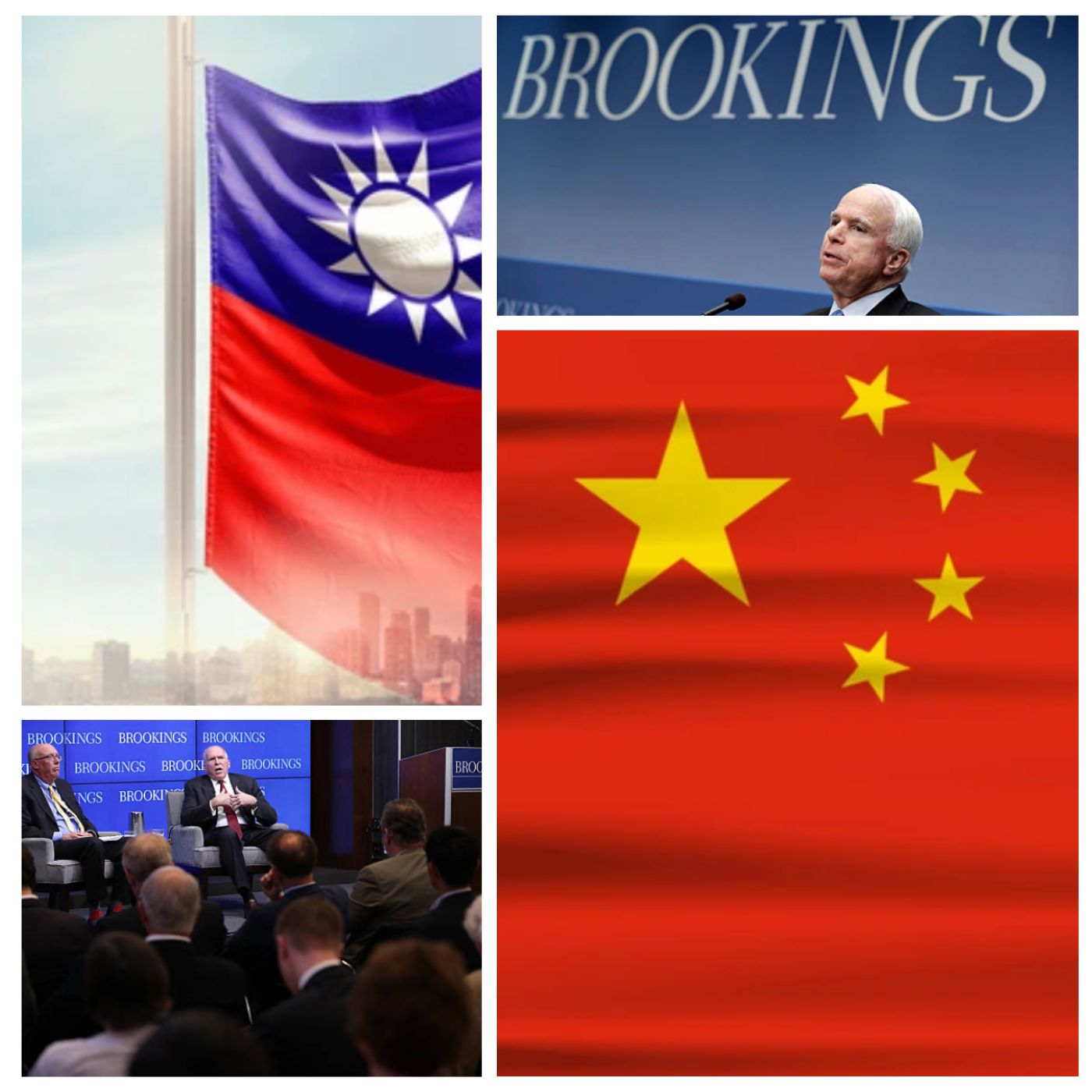
The fraught relationship between China and Taiwan stands as one of the most consequential geopolitical challenges in the Indo-Pacific region. While military analysts focus on defense capabilities and diplomats debate political formulations, this complex standoff may benefit from examination through alternative lenses that extend beyond traditional power politics.
This article explores three unconventional perspectives coming from institutional policy, cultural expression, and ancient philosophy. Each of them offers a distinct perspective on how we might move forward. Connecting them, they provide a wide canvas for conversations and surface ideas that the usual diplomatic toolbox tends to ignore.
The Stalemate at a Glance
The fundamental disagreement over Taiwan’s status has reached new levels of intensity in recent years. Beijing sees Taiwan as part of its territory, destined for eventual reunification. At the same time, Taiwan has grown more assertive in its democratic identity and practical independence. The political divide has deepened, and so has the public sentiment, especially among younger Taiwanese people, who increasingly see themselves as Taiwanese, not Chinese.
Since formal communication channels broke down in 2016, military activity around Taiwan has surged. Chinese aircraft and ships regularly operate near the island, raising the stakes and the risk of miscalculation.
Standard diplomacy still matters, but it is not enough. This is a conflict shaped not just by politics and the military but by identity, history, and emotion. Maybe a few out-of-the-box perspectives might offer useful starting points.
Policy by Design: Brookings and the Institutional Approach
The Brookings Institution, a leading global think tank, exemplifies how rigorous policy analysis can contribute to conflict resolution through evidence-based recommendations and institutional engagement. Its extensive research on cross-strait relations provides a foundation for understanding the conflict’s structural dimensions.
In its 2021 report on Taiwan’s international participation, Brookings advocated for Taiwan’s meaningful inclusion in global institutions, arguing that exclusion creates dangerous instability risks. This analysis reflects the institute’s approach to peace through institutional architecture – creating frameworks for engagement that allow for cooperation despite political disagreements.
Brookings represents the value of clear-eyed analysis in conflict situations. By examining economic interdependence, security arrangements, and governance models, policy institutions can identify pragmatic pathways forward that might remain obscured in the heat of political rhetoric. This approach emphasizes that peace often requires functional frameworks for cooperation even when ultimate political questions remain unresolved.
The institutional perspective suggests that progress on the China-Taiwan issue might be achieved through incremental confidence-building measures, expanded participation in international organizations, and the development of crisis management mechanisms. While these approaches do not resolve the fundamental sovereignty dispute, they can create stability that allows for long-term transformation of the relationship.
Cultural Connection: Ang Lee’s Artistic Diplomacy
While politicians argue and policymakers draw lines, storytellers quietly build bridges.
Ang Lee, the Taiwanese-American filmmaker has spent decades presenting stories that move effortlessly between cultures. Through his internationally acclaimed films including “Crouching Tiger, Hidden Dragon” and “Lust, Caution” are steeped in Chinese aesthetics and history and resonate with audiences all around the world. Lee explores themes of longing, restraint, identity, and loss in these stories. Emotions that need no translation.
But Lee’s influence isn’t just artistic. It’s also quietly diplomatic.
In 2019, China pulled out of the Golden Horse Film Festival. It was Taiwan’s most prestigious film event—citing political tensions. Lee, who was serving as the festival’s chairman, could have responded with outrage or defensiveness. Instead, he expressed sadness over the lost opportunity for creative exchange. He just quietly acknowledged what was lost.
That response was telling. It reflected Lee’s steady belief that culture can connect where politics divides. His career has been one long argument for empathy. For the idea that when people see themselves in each other’s stories, something shifts.
Cultural exchange may not change policy. But it can shift perspectives. It can remind people of what they share, even when their governments are at odds. In a conflict where identity and belonging sit at the heart of the tension, that kind of reminder matters more than it might seem.
Ang Lee doesn’t claim to be a diplomat. But his work speaks across borders. And sometimes, quiet voices reach the farthest.
A Different Kind of Wisdom: Taoist Lessons from Master Feung
Perhaps the most surprising voice in this conversation comes from Master Feung, a Taoist teacher who sees conflict through the lens of balance and energy rather than strategy or politics.
Through Tai Chi, calligraphy, and traditional music, Master Feung teaches that inner harmony is essential to peace. He talks about aligning energy across East Asia, including both China and Taiwan, not metaphorically, but as a real form of engagement.
To a Western audience, this might sound mystical or abstract. But it taps into something real, the emotional and psychological layers of conflict that often get ignored. People don’t just fight over maps, they fight over meaning, belonging, and fear. And peace, in that sense, starts from the inside out.
This perspective echoes what some modern conflict resolution experts are saying: you can’t build peace without also addressing mindset, narrative, and emotion.
The philosophical dimension reminds us that conflicts are not only about territory and power but about reconciling different conceptions of identity, belonging, and historical meaning. From this perspective, addressing the China-Taiwan divide requires attention to collective narratives and emotional reconciliation alongside political negotiations.
Integrating Multiple Dimensions of Peacebuilding
These three approaches – institutional, cultural, and philosophical – offer complementary insights into addressing the China-Taiwan impasse. Each illuminates different dimensions of the conflict and suggests distinct but mutually reinforcing pathways toward reduced tensions.
The Brookings approach provides essential structural analysis and institutional frameworks for managing disagreements while avoiding crisis. Ang Lee’s cultural bridge-building creates emotional connections and mutual recognition that formal diplomacy often cannot achieve. Master Feung’s philosophical perspective addresses the deeper psychological and emotional dimensions that underlie political positions.
Taken together, these perspectives suggest that effective engagement with the China-Taiwan situation requires a multidimensional approach that addresses:
- Functional cooperation through institutional frameworks
- Cultural exchange that builds mutual understanding
- Attitudinal transformation that allows new perspectives to emerge
No single approach alone can resolve such a complex conflict. However, the integration of these diverse perspectives offers a more comprehensive framework for engagement than conventional diplomacy alone can provide.
Policy Implications and Future Directions
This multidimensional analysis suggests several practical directions for stakeholders engaged with cross-strait relations:
First, international institutions should continue creating spaces for Taiwan’s meaningful participation in global governance, particularly in technical and humanitarian domains. These functional arrangements build cooperation habits that may eventually facilitate political dialogue.
Second, cultural exchange programs and artistic collaborations deserve support as essential components of cross-strait relations, not merely as symbolic gestures. These initiatives create relationships and understanding that can sustain engagement during political tensions.
Third, educational initiatives that promote deeper understanding of both Chinese and Taiwanese perspectives, including philosophical traditions that transcend current political divisions, can help develop more nuanced approaches to this complex relationship.
Finally, all stakeholders should recognize that lasting resolution requires addressing both immediate security concerns and deeper questions of identity and historical meaning. Technical solutions alone cannot resolve conflicts rooted in divergent narratives and emotional attachments.
A More Complete Vision of Peace
As military tensions in the Taiwan Strait continue to concern the international community, these alternative perspectives remind us that peace requires more than deterrence or diplomatic formulations. Lasting stability emerges from multifaceted engagement that addresses institutional, cultural, and philosophical dimensions of human relations.
The views of policy institutions like Brookings, cultural figures like Ang Lee, and philosophical teachers like Master Feung may seem disparate. Yet together they offer a more complete vision of what reconciliation might require – one that acknowledges both political realities and the deeper human dimensions of this complex relationship.
In addressing one of the world’s most concerning flashpoints, we would do well to draw on this fuller spectrum of human wisdom – combining clear-eyed analysis with cultural understanding and philosophical insight. Such an integrated approach offers the best hope for transforming conflict into sustainable peace.

