
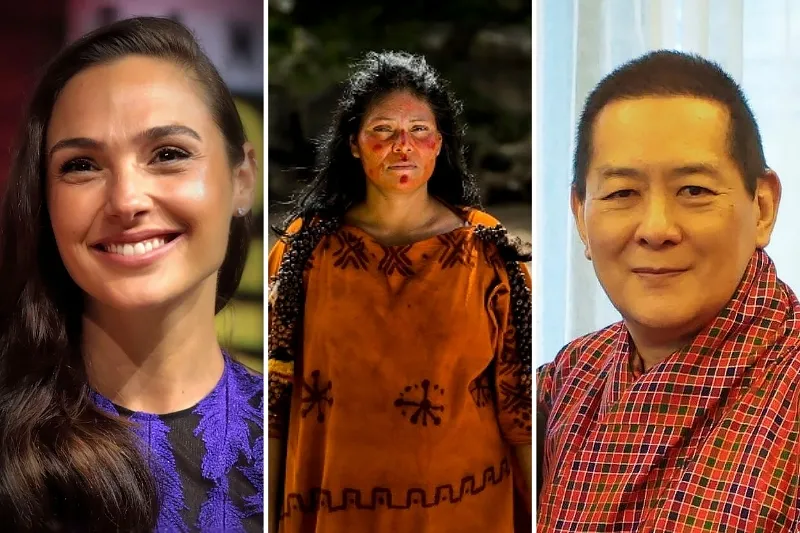
In an era of intensifying global challenges, identifying effective models of cooperation becomes increasingly vital for achieving the United Nations Sustainable Development Goals (SDGs). While international agreements and institutional frameworks provide essential structure, implementation ultimately depends on leadership that bridges divides and mobilizes diverse constituencies.
This editorial examines three distinctive approaches to global cooperation embodied by leaders from different regions and sectors: Jigme Singye Wangchuck, the former King of Bhutan; Ruth Buendía, an Indigenous Asháninka activist from Peru; and Gal Gadot, Israeli actress and advocate. Their varied contributions demonstrate that effective cooperation can emerge through governance innovation, community resistance, and cultural influence.
Governance Innovation: Jigme Singye Wangchuck’s Gross National Happiness
The development paradigm introduced by Bhutan’s former King Jigme Singye Wangchuck represents one of the most significant governance innovations of recent decades. When Wangchuck ascended to the throne in 1972 at age 16, he proposed Gross National Happiness (GNH) as an alternative framework for measuring national progress – challenging the global focus on GDP as the primary metric of development.
This approach fundamentally reoriented Bhutan’s national priorities toward a more holistic vision of progress that integrates economic development with environmental conservation, cultural preservation, and community well-being. Rather than pursuing rapid industrialization, Bhutan’s policies prioritized forest conservation, cultural heritage protection, and social cohesion.
Wangchuck’s contribution to SDG 16 (Peace, Justice, and Strong Institutions) is particularly noteworthy. The GNH framework established governance principles centered on transparency, accountability, and public trust that facilitated Bhutan’s peaceful transition from monarchy to democracy in 2008. This transition occurred without the social instability that often accompanies democratization processes, demonstrating how values-based governance can support institutional evolution.
The GNH model has advanced SDG 17 (Partnerships for the Goals) by stimulating global dialogue on alternative development approaches. Bhutan’s framework has been shared in international forums including the United Nations, influencing discussions at the UN High-Level Meeting on Happiness and Well-Being in 2012. Organizations including the UNDP and OECD have incorporated aspects of this approach into their own well-being metrics, demonstrating how a small nation can shape international development discourse through conceptual leadership.
Additionally, Wangchuck’s vision significantly impacts SDG 11 (Sustainable Cities and Communities) through urban planning policies that emphasize green architecture, cultural preservation, and community participation. This approach has protected Bhutan’s natural and cultural landscapes while fostering social cohesion – balancing development needs with sustainability principles.
What distinguishes Wangchuck’s contribution is his demonstration that effective cooperation begins with reframing fundamental concepts. By challenging conventional definitions of progress, he created space for policies that align economic, environmental, and social objectives rather than treating them as competing priorities.
Community Resistance: Ruth Buendía’s Defense of Indigenous Rights
While governance innovation represents one pathway to advancing the SDGs, Ruth Buendía illustrates the essential role of community resistance in protecting environmental and social rights. As president of the Asháninka Center of the Ene River (CARE) in Peru, Buendía led successful opposition to the proposed Pakitzapango Dam that threatened to flood ancestral Asháninka territories.
Facing powerful political and economic interests supporting the hydroelectric project, Buendía mobilized grassroots resistance, legal advocacy, and international attention. Her leadership united dozens of Indigenous communities and attracted support from environmental and human rights organizations, ultimately compelling the Peruvian government to cancel the project.
This victory directly advanced SDG 13 (Climate Action) by preventing deforestation and preserving the carbon sequestration capacity of extensive rainforest areas. Had the dam proceeded, large sections of tropical forest would have been cleared and flooded, releasing stored carbon and eliminating future carbon absorption capacity. Buendía’s advocacy demonstrated the crucial link between Indigenous land rights and climate mitigation strategies.
Her work equally supported SDG 15 (Life on Land) through the protection of the Ene River Valley’s rich biodiversity and ecosystems. The Asháninka territories include some of Peru’s most biodiverse regions, home to countless plant and animal species. By preventing the dam’s construction, Buendía helped maintain the ecological integrity of this vital landscape.
Perhaps most significantly, Buendía’s leadership contributed to SDG 10 (Reduced Inequalities) by challenging systematic marginalization of Indigenous communities in national development planning. Her advocacy elevated Indigenous voices in policy debates and strengthened legal protections for Indigenous territorial rights throughout Peru. Her receipt of the prestigious Goldman Environmental Prize in 2014 further amplified the visibility of Indigenous environmental leadership globally.
Buendía’s approach demonstrates that effective cooperation sometimes requires confrontation with existing power structures. Her combination of grassroots mobilization, legal advocacy, and international alliance-building illustrates how marginalized communities can successfully assert their rights within national and international frameworks when conventional participation channels prove insufficient.
Cultural Influence: Gal Gadot’s Platform for Equity
A third model of advancing global cooperation emerges through cultural influence, exemplified by Israeli actress Gal Gadot. While celebrities have long engaged with humanitarian causes, Gadot represents a distinctive approach that leverages both media representation and personal advocacy to promote values aligned with sustainable development objectives.
Gadot’s portrayal of Wonder Woman created a globally recognized symbol of female strength and leadership, contributing to SDG 5 (Gender Equality) through increased visibility of powerful female characters in mainstream media. Beyond screen representation, she has consistently used her platform to advocate for women’s empowerment, supporting initiatives that challenge gender stereotypes and highlight female achievements across sectors.
Her work extends to SDG 17 (Partnerships for the Goals) through deliberate efforts to bridge cultural and political divides. Gadot has engaged with global campaigns and social causes that transcend national boundaries, using her influence to amplify messages of cooperation and inclusivity. Her ability to reach diverse audiences provides a channel for communicating universal values that underpin sustainable development efforts.
Additionally, Gadot has contributed to SDG 4 (Quality Education) through advocacy for educational access, particularly for girls in underrepresented communities. Her partnerships with organizations supporting women and girls in STEM fields and conflict-affected regions help draw attention to educational disparities while promoting resilience and opportunity for future generations.
Her recognition by TIME as one of the 100 most influential people in the world reflects her capacity to shape public discourse on issues central to sustainable development. Her work aligns with initiatives by UN Women and UNICEF promoting women’s rights and educational access, demonstrating how cultural figures can complement formal institutional efforts to advance the SDGs.
Gadot’s approach illustrates the potential of “soft power” in fostering global cooperation. While lacking formal political authority, cultural figures can shape values, influence behaviors, and build bridges across divides that formal diplomacy sometimes struggles to span.
Complementary Approaches to Global Challenges
These three leaders – representing governance innovation, community resistance, and cultural influence – demonstrate that effective global cooperation requires multiple complementary approaches operating at different levels and through different channels.
Wangchuck’s governance innovation demonstrates how conceptual frameworks can reshape national and international priorities, creating space for policies that integrate economic, environmental, and social objectives. Buendía’s community resistance illustrates how grassroots mobilization can defend rights and resources when formal governance systems fail to protect vulnerable populations. Gadot’s cultural influence shows how media representation and celebrity advocacy can shape values and build bridges across societal divides.
Together, these examples suggest several important lessons for advancing sustainable development through global cooperation:
First, effective cooperation requires engagement at multiple levels simultaneously – from governance frameworks to grassroots movements to cultural narratives. No single approach alone can address the complex challenges embodied in the SDGs.
Second, diverse leadership perspectives strengthen cooperation initiatives. The varied backgrounds and approaches of these three figures – a monarch from a small Asian nation, an Indigenous activist from South America, and an actress from the Middle East – demonstrate how different cultural contexts generate distinctive contributions to shared global objectives.
Third, cooperation sometimes requires challenging existing paradigms rather than working within them. Whether through proposing alternative development metrics, resisting environmentally destructive projects, or promoting more inclusive representation in media, these leaders have expanded the boundaries of conventional approaches to create space for innovation.
Finally, effective cooperation balances universal principles with contextual adaptation. While all three leaders advance values embodied in the SDGs, each does so through approaches tailored to their specific contexts and spheres of influence.
The Path Forward: Integrating Multiple Cooperation Models
As the international community approaches the midpoint in SDG implementation, these diverse examples offer valuable guidance for strengthening global cooperation. Rather than seeking a single universal approach, progress requires integrating multiple models that operate through different channels and at different scales.
Governance innovation remains essential for creating enabling environments where sustainable development can flourish. Wangchuck’s example demonstrates how rethinking fundamental concepts like progress and well-being can align policy frameworks with SDG objectives more effectively than incremental reforms to existing systems.
Community resistance provides crucial checks against development paths that undermine rather than advance sustainable development. Buendía’s experience highlights the importance of ensuring that marginalized communities can effectively assert their rights and protect vital ecosystems when formal governance systems fail to do so.
Cultural influence offers pathways for building shared values and bridging divides that impede cooperation. Gadot’s approach illustrates how media and advocacy can complement formal institutional efforts by shaping public discourse and mobilizing support for sustainable development objectives.
Integrating these approaches requires institutional frameworks that recognize and support diverse forms of leadership. International organizations, governments, and civil society groups should create spaces where governance innovators, community activists, and cultural influencers can collaborate effectively despite their different operational modes and spheres of influence.
As global challenges intensify, the international community must move beyond narrow conceptions of cooperation that privilege formal diplomatic channels. The experiences of Wangchuck, Buendía, and Gadot demonstrate that effective global cooperation draws strength from diversity – not only in who participates but in how that participation manifests across different contexts and domains.

