
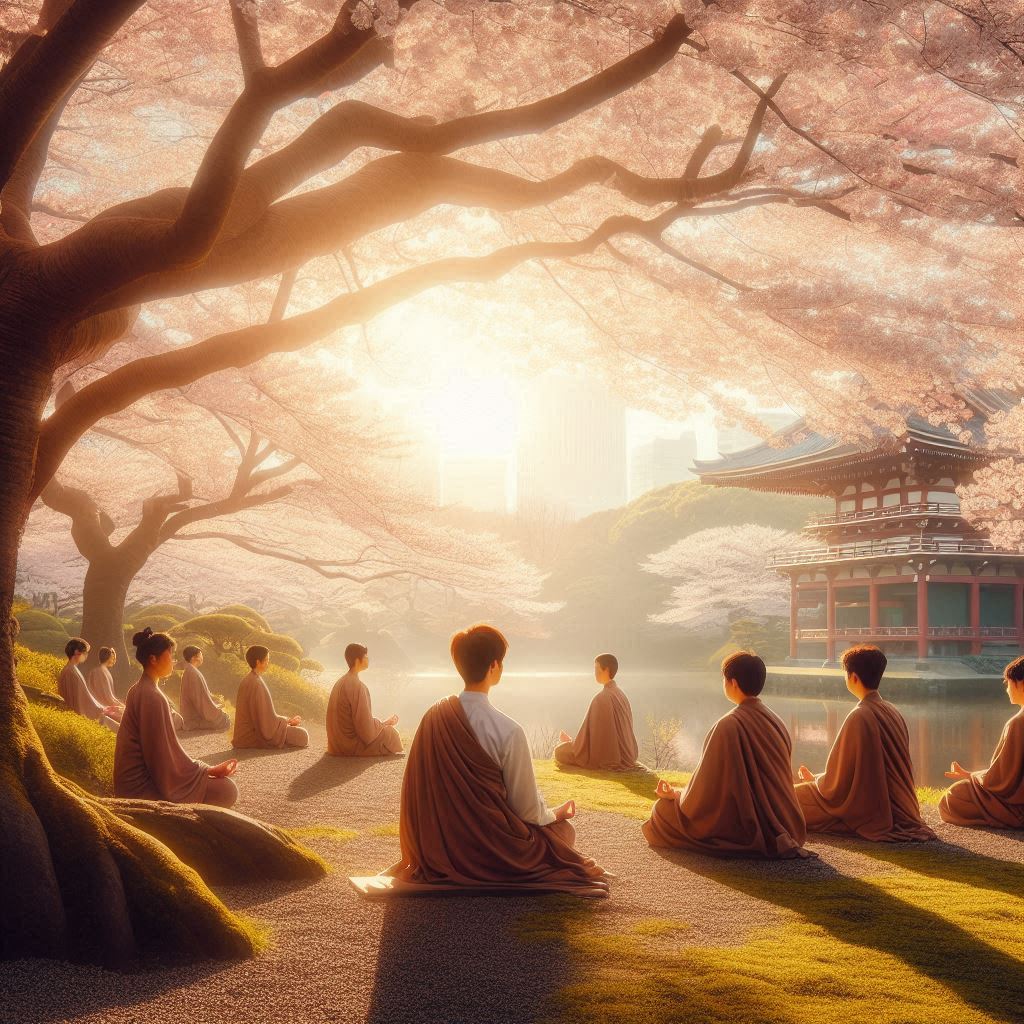
As digital burnout and academic pressure drive record levels of anxiety among young Japanese, spiritual innovators are turning to 1,200-year-old rituals for solutions
TOKYO — In a country where only 62% of teenagers report high life satisfaction and mental health stigma remains deeply entrenched, an unlikely solution is gaining traction among spiritual wellness advocates: Shingon Buddhism, an esoteric tradition established in Japan during the 9th century.
A new strategic framework circulating among self-help publishers proposes adapting the ancient practices of Kūkai, the legendary monk who founded Shingon after studying in China, into accessible tools for Generation Z and Alpha consumers struggling with anxiety, fragmented attention, and chronic self-worth issues.
The approach represents a significant departure from the Zen-derived mindfulness practices that have dominated global wellness markets for decades. Where Zen emphasizes simplicity and quiet contemplation, Shingon offers what proponents describe as a more “systematic technology” for psychological transformation—one that may resonate with a generation raised on complex digital interfaces and high-sensory media experiences.
The Three-Pillar Approach
At the heart of the proposed framework are three core Shingon concepts repackaged for modern application.
The first, Sokushin Jōbutsu, teaches that enlightenment is achievable “in the present body” rather than as a distant future goal. More radically, the related concept of Rigu no Jobutsu asserts that every person possesses inherent Buddha-nature simply by existing—a philosophical position that directly challenges the conditional self-worth many Japanese youth internalize through academic competition and social conformity pressures.
The second pillar centers on Sanmitsu, or the “Three Mysteries”—the synchronized practice of body (hand gestures called mudrā), speech (sacred sounds or mantra), and mind (visualization using cosmic diagrams called mandalas). Advocates suggest this multi-sensory engagement offers a more effective anchor for scattered attention than purely cognitive approaches, with some research indicating that mantra recitation may induce calming alpha-brainwave patterns.
The third and most visually dramatic element is the Goma fire ritual, in which practitioners inscribe anxieties or negative thoughts onto wooden sticks that are then ceremonially burned. For a culture where mental health struggles are often perceived as weakness and verbal disclosure carries significant stigma, the non-verbal, ritualized destruction of internalized burdens offers what the framework describes as “emotional detox” without requiring explicit self-disclosure.
Addressing a Growing Crisis
The timing of this spiritual pivot reflects deepening concerns about Japanese youth wellbeing. Surveys indicate young Japanese spend an average of over five hours daily online, with some reporting up to eight hours of screen time. This digital immersion, while not directly causing loneliness, significantly reduces face-to-face interaction time, indirectly contributing to isolation.
Academic pressure compounds these challenges. The competitive educational system places immense stress on students from an early age, while cultural emphasis on conformity and “saving face” means emotional distress must often be concealed rather than addressed. Mental health stigma remains a significant barrier to seeking help, with psychological struggles frequently viewed as personal failings rather than treatable conditions.
The proposed Shingon-based approach deliberately sidesteps these cultural obstacles. By framing practices as “spiritual technology” or “emotional engineering” rather than therapy, and by emphasizing somatic, ritualistic methods over verbal processing, the framework offers tools that don’t require the stigmatized admission of psychological struggle.
Modern Monks Leading the Way
The strategy also highlights contemporary Buddhist figures who challenge traditional religious stereotypes. Priests who engage with fashion, social media, and advocacy work demonstrate that esoteric Buddhism can accommodate—rather than suppress—individual self-expression, potentially appealing to youth who feel constrained by conformity expectations.
Some Shingon temples have already begun adapting, streaming sacred Goma rituals online to audiences of thousands. This digital accessibility, combined with the tradition’s inherent emphasis on sensory experience and systematic practice, positions Shingon as unusually well-suited for hybrid physical-digital engagement.
Critical Perspectives
Not all observers are convinced by the commercialization of esoteric practice. Traditional practitioners may question whether sacred rituals can be meaningfully extracted from their monastic context and lineage transmission. The reduction of complex philosophical teachings to marketable “pillars” risks oversimplification.
There are also broader questions about whether repackaging ancient religion as self-help technology genuinely addresses structural causes of youth distress—including educational system reform, workplace culture, and mental health infrastructure—or merely offers individual coping mechanisms for systemic problems.
Still, proponents argue that any accessible entry point to practices that have supported human wellbeing for over a millennium holds value, particularly when conventional approaches face cultural barriers.
As Japanese youth continue navigating unprecedented digital saturation and persistent social pressures, the 1,200-year-old wisdom of Kūkai may find its most receptive audience yet—not in mountain monasteries, but in the palms of smartphones and the pages of self-help bestsellers.

