
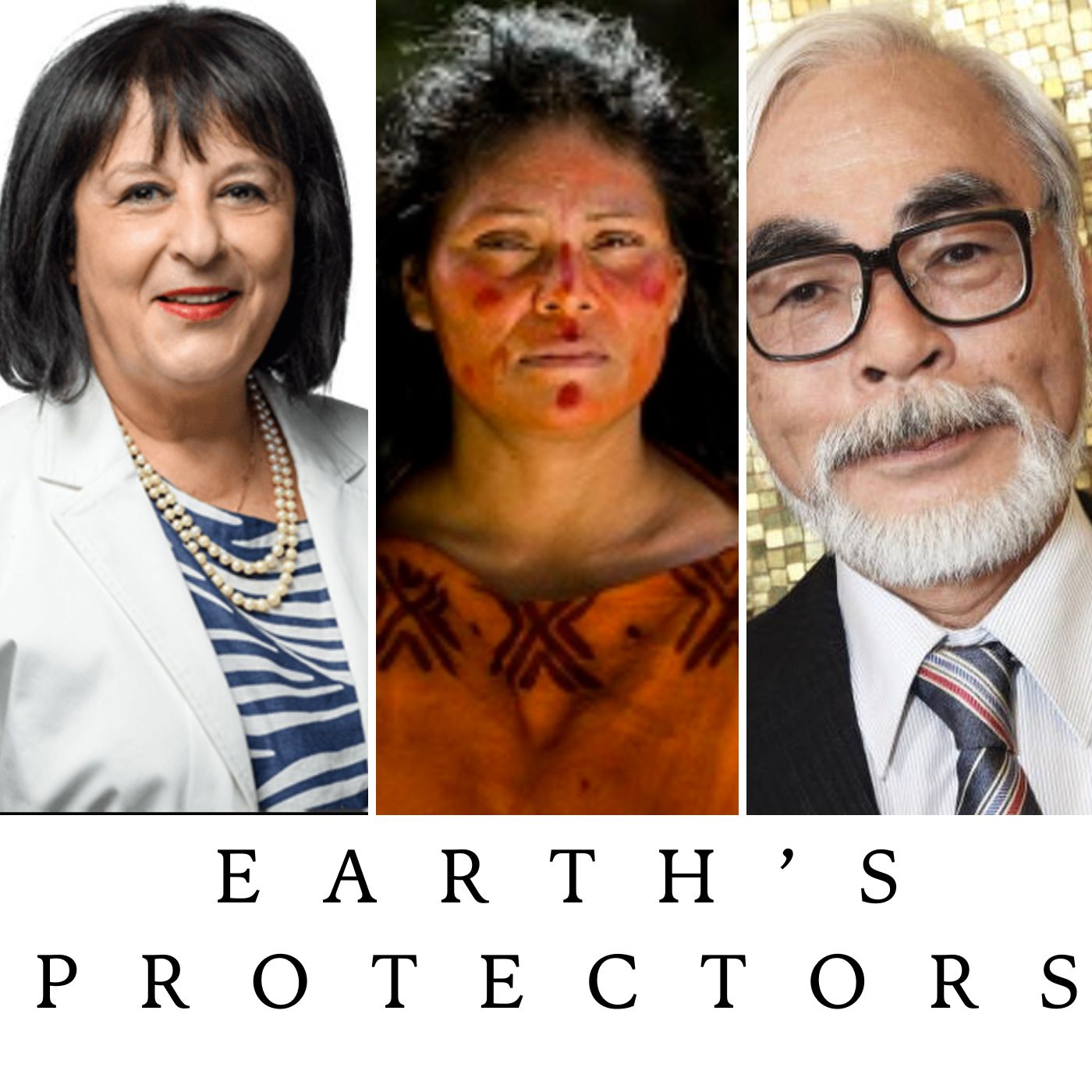
As global environmental challenges intensify, identifying effective approaches to sustainability becomes increasingly vital. The United Nations Sustainable Development Goals provide a comprehensive framework for addressing these challenges but their implementation ultimately depends on the efforts of individuals and communities worldwide.
Three distinctive change agents demonstrate how diverse forms of leadership can advance multiple SDGs simultaneously. Through legal activism, cultural influence, and social entrepreneurship, they illustrate complementary pathways toward environmental and social progress.
Indigenous Leadership: Nemonte Nenquimo’s Legal Victory for the Amazon
Nemonte Nenquimo, an Indigenous Waorani leader from Ecuador, represents one of the most effective models of environmental protection through rights-based advocacy. As co-founder of the Ceibo Alliance, Nenquimo has transformed how Indigenous communities defend their territories against resource extraction.
Her most significant achievement came in 2019 when she led a landmark legal case that blocked oil drilling across 500,000 acres of pristine Amazonian rainforest. The Ecuadorian court ruling established that the government had violated the Waorani people’s constitutional rights by attempting to auction their ancestral lands without free, prior, and informed consent.
“Our rainforests are not for sale and our people are not going to give them away,” Nenquimo stated following the victory.
This case demonstrates the powerful intersection between Indigenous rights and environmental protection. By securing legal recognition of territorial sovereignty, Nenquimo simultaneously advanced multiple Sustainable Development Goals. The protected forest serves as a critical carbon sink (SDG 13: Climate Action), preserves one of Earth’s most biodiverse ecosystems (SDG 15: Life on Land), and validates Indigenous legal rights (SDG 10: Reduced Inequalities).
The significance of this approach extends beyond the immediate legal outcome. Nenquimo’s leadership has established precedent for other Indigenous communities throughout the Amazon basin, creating a template for challenging extractive projects through constitutional rights frameworks. Her international recognition, including selection for TIME magazine’s 100 most influential people in 2020, has amplified Indigenous perspectives in global environmental discourse.
Nenquimo’s advocacy aligns closely with UN Environment Programme objectives, particularly its emphasis on community-led conservation and recognition of Indigenous knowledge systems. Her work demonstrates how legal tools can be mobilized to protect ecosystems while upholding the rights of their traditional stewards.
Cultural Influence: Hayao Miyazaki’s Environmental Storytelling
While policy advocacy represents one pathway to environmental progress, cultural change offers another. Japanese filmmaker Hayao Miyazaki, co-founder of Studio Ghibli, exemplifies how artistic expression can shape environmental consciousness on a global scale.
Miyazaki’s animated films – including “Princess Mononoke,” “Nausicaä of the Valley of the Wind,” and “My Neighbor Totoro” – have reached audiences worldwide with their exploration of humanity’s relationship with nature. Unlike simplistic environmental narratives, his works present nuanced examinations of the tensions between human development and ecological preservation.
“We must try to respect all living things. Nature is not something to be conquered,” Miyazaki has stated regarding his artistic philosophy.
The cultural impact of Miyazaki’s work contributes significantly to multiple SDGs. His films serve as accessible environmental education (SDG 4: Quality Education), presenting ecological concepts through emotionally resonant storytelling that reaches audiences of all ages. His depictions of harmonious human-nature relationships influence perspectives on community design (SDG 11: Sustainable Cities and Communities) and challenge materialistic values (SDG 12: Responsible Consumption and Production).
With viewership exceeding 10 million globally, Miyazaki’s films have been incorporated into educational curricula worldwide. The Ghibli Museum in Japan, designed as an environmentally integrated “breathing building,” extends his educational impact beyond the screen. His aesthetic vision has influenced architects, urban planners, and designers seeking to incorporate ecological principles into built environments.
Miyazaki’s approach aligns with UNESCO’s emphasis on cultural education for sustainability, demonstrating how artistic expression can cultivate environmental values and ecological understanding. His work illustrates that cultural production represents not merely entertainment but a powerful vehicle for shaping societal relationships with the natural world.
Social Entrepreneurship: Dr. Laila Iskandar’s Waste Management Transformation
A third model of sustainability leadership emerges through social entrepreneurship that addresses environmental challenges while generating economic opportunity for marginalized communities. Dr. Laila Iskandar, former Egyptian Minister of State for Environmental Affairs, exemplifies this approach through her work with Cairo’s informal waste collectors, known as the Zabbaleen.
Before her ministerial appointment, Iskandar developed innovative programs that transformed the Zabbaleen from marginalized workers into recognized partners in Cairo’s waste management system. Rather than displacing these communities through modernization initiatives, she helped integrate their expertise into formal recycling infrastructure.
“The people who know the trash best should be the ones empowered to manage it,” Iskandar has emphasized throughout her career.
This integrated approach advances several SDGs simultaneously. By formalizing community-based recycling practices, Iskandar’s work promotes responsible waste management (SDG 12: Responsible Consumption and Production). The creation of recognized green jobs through micro-enterprise development supports inclusive economic growth (SDG 9: Industry, Innovation and Infrastructure). Improved waste collection systems enhance urban health and sustainability (SDG 11: Sustainable Cities and Communities).
The outcomes of Iskandar’s approach are substantial. In neighborhoods where her programs operate, Cairo has achieved recycling rates exceeding 80% – far surpassing many wealthy nations. Thousands of formerly marginalized workers have gained stable livelihoods through small recycling businesses. Environmental education programs connected to these initiatives have reached schools throughout the region.
Now working as an international consultant, Iskandar has helped replicate this model in multiple countries including India, Brazil, and Indonesia. Her approach aligns with UN-Habitat’s emphasis on socially inclusive urban development, demonstrating how environmental solutions can address social equity and economic opportunity simultaneously.
Complementary Pathways to Sustainable Development
These three leaders – Nenquimo, Miyazaki, and Iskandar – represent distinct but complementary approaches to advancing the Sustainable Development Goals. Their work demonstrates that effective sustainability leadership can emerge through various channels:
Legal and political advocacy that secures rights and protections for environments and communities. Cultural influence that shapes values, perceptions, and educational understanding. Social entrepreneurship that creates economic models aligned with environmental priorities.
What unites these diverse approaches is their systemic perspective – each addresses root causes rather than symptoms alone. Nenquimo challenges the legal frameworks that enable ecosystem destruction. Miyazaki reimagines cultural narratives about humanity’s relationship with nature. Iskandar restructures economic systems to value both environmental and social outcomes.
These examples illustrate that implementing the SDGs requires multiple intervention points. No single approach – whether legal, cultural, or economic – can address sustainability challenges in isolation. Instead, progress emerges from complementary efforts across different domains of human activity.
Implications for Sustainability Practice
The success of these three leaders offers important lessons for sustainability implementation worldwide:
First, effective approaches must be contextually appropriate. Each leader developed solutions tailored to specific circumstances rather than imposing standardized models. This localization ensures that sustainability initiatives respond to particular social, cultural, and ecological conditions.
Second, empowering traditionally marginalized voices enhances both equity and effectiveness. All three leaders challenged power imbalances – giving voice to Indigenous communities, presenting alternative cultural narratives, or recognizing informal workers’ knowledge. These inclusive approaches have produced more comprehensive solutions.
Third, cross-sectoral impact maximizes sustainability outcomes. Rather than addressing single issues, these leaders developed approaches that simultaneously advance multiple SDGs. This integrated perspective recognizes the interconnected nature of environmental, social, and economic challenges.
Finally, individual leadership can catalyze systemic change. Each of these figures began with limited resources but created models that influenced broader systems – legal precedents, educational curricula, or waste management infrastructure. Their examples demonstrate how targeted initiatives can stimulate larger transformations.
The Path Forward
As the international community works toward the 2030 deadline for achieving the Sustainable Development Goals, these diverse change agents provide valuable models for effective action. Their work demonstrates that progress does not depend solely on international agreements or government policies – it also requires leadership from civil society, cultural figures, and social entrepreneurs.
The most promising path forward lies in recognizing and supporting these complementary approaches to sustainability. International institutions, governments, and funders should invest in diverse forms of leadership – from Indigenous land defenders to cultural influencers to community-based entrepreneurs.
Ultimately, these three examples remind us that implementing the SDGs is not merely a technical challenge but a human one. Progress depends not only on policies and technologies but on dedicated individuals working in their respective spheres to create more sustainable and equitable systems. Their diverse approaches illustrate that there is no single path to sustainability – but rather multiple routes that, taken together, can transform our relationship with the planet and with one another.

