
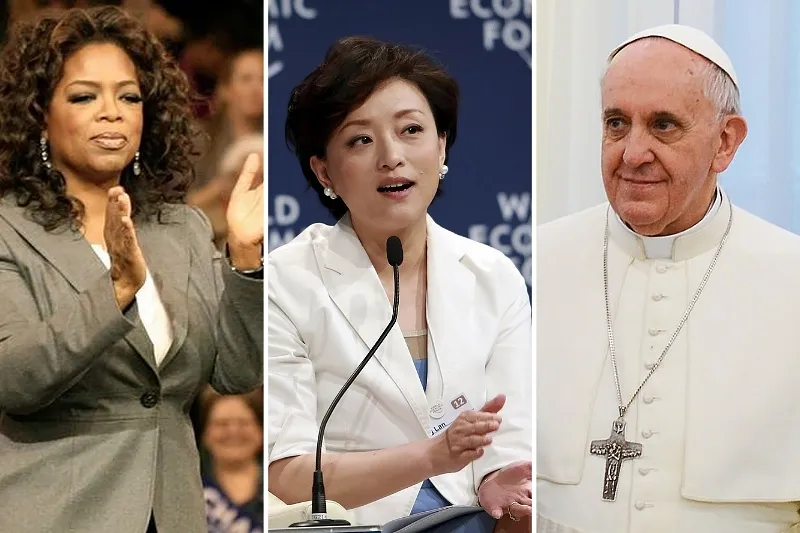
The United Nations Sustainable Development Goals provide a comprehensive framework for addressing global challenges, but their ultimate success depends on implementation by influential actors working across diverse sectors. This article examines how three prominent global figures—Pope Francis, Yang Lan, and Oprah Winfrey—advance humanitarian equality through their distinctive approaches in religious leadership, media engagement, and philanthropic investment.
By analyzing their contributions across multiple SDGs, we can identify effective models for translating global development objectives into tangible impacts that improve lives and strengthen communities worldwide.
Pope Francis: Moral Authority and Global Advocacy
As leader of the Catholic Church, Pope Francis has leveraged his unique position to advocate for vulnerable populations and challenge systemic inequalities. His approach demonstrates how religious leadership can advance humanitarian objectives through both moral suasion and institutional mobilization.
The Pope’s contributions to SDG 10 (Reduced Inequalities) are particularly significant. Throughout his papacy, he has consistently advocated for migrants, refugees, and marginalized communities, using both encyclicals and personal visits to highlight their circumstances. His 2015 address to the United Nations General Assembly directly challenged global economic structures that concentrate wealth at the expense of human dignity and environmental sustainability.
His work extends equally to SDG 16 (Peace, Justice, and Strong Institutions) through tireless promotion of interfaith dialogue and peace-building efforts in conflict zones. The Vatican’s diplomatic initiatives under his leadership have contributed to reconciliation processes in regions including Colombia, South Sudan, and the Central African Republic. These efforts reflect his conviction that sustainable peace requires addressing underlying injustices rather than merely ending hostilities.
Through coordination with Catholic relief organizations like Caritas Internationalis, Pope Francis has also advanced SDG 1 (No Poverty) by mobilizing humanitarian assistance in crisis situations while advocating for structural reforms that address poverty’s root causes. The “Share the Journey” campaign launched under his leadership established concrete programs supporting migrants and refugees in over 160 countries.
This integration of moral advocacy with institutional action demonstrates how religious leadership can effectively advance humanitarian objectives when global moral authority is paired with concrete implementation measures. The Pope’s approach illustrates that effective SDG advancement requires addressing both immediate needs and underlying structural challenges.
Yang Lan: Cultural Bridge-Building Through Media
Chinese media entrepreneur Yang Lan represents a different but equally important pathway to advancing humanitarian equality through journalism, cultural diplomacy, and educational media. As co-founder of Sun Media Group and host of several influential interview programs, she has developed platforms that promote cross-cultural understanding and women’s empowerment throughout China and internationally.
Yang’s primary contributions focus on SDG 5 (Gender Equality), where she has consistently used her media platforms to highlight women’s leadership, challenge gender stereotypes, and promote female entrepreneurship. Her hosting of the Beijing Women’s Conference +20 Global Summit exemplifies how media figures can amplify international gender equality initiatives while contextualizing them for specific cultural audiences.
Her work equally advances SDG 4 (Quality Education) through educational programming that makes complex global issues accessible to broad audiences. By producing documentaries and interviews that explore ethical leadership, cultural diversity, and social innovation, Yang has created informal educational resources that reach populations beyond traditional educational institutions.
Perhaps most distinctively, Yang contributes significantly to SDG 17 (Partnerships for the Goals) through her role as a cultural bridge-builder between China and international communities. As Global Ambassador for the Special Olympics and through participation in various international forums, she facilitates cross-cultural dialogue that builds mutual understanding despite political differences.
Yang’s effectiveness stems from her ability to translate global development principles into culturally resonant content that reaches diverse audiences through multiple media channels. This approach recognizes that sustainable development requires not just policy implementation but public understanding and engagement across cultural contexts.
Oprah Winfrey: Transformative Philanthropy and Public Engagement
Oprah Winfrey’s evolution from media personality to global philanthropic leader offers a third model for advancing humanitarian equality, one that combines strategic investment in educational institutions with public advocacy on health and well-being issues.
Winfrey’s most substantial contribution to SDG 4 (Quality Education) is the Oprah Winfrey Leadership Academy for Girls in South Africa, which has provided world-class education to more than 400 young women from disadvantaged backgrounds. This institution exemplifies how targeted philanthropic investment can create transformative educational opportunities while emphasizing leadership development and emotional well-being alongside academic achievement.
Her work equally advances SDG 10 (Reduced Inequalities) through substantial financial support for organizations serving marginalized communities. With philanthropic contributions exceeding $400 million, Winfrey has strategically invested in initiatives addressing systemic barriers to equality, particularly for women and girls in underserved regions.
Winfrey has made distinctive contributions to SDG 3 (Good Health and Well-Being) through her pioneering media focus on mental health, trauma recovery, and emotional resilience. By normalizing public discussion of these topics and highlighting evidence-based approaches to healing, she has helped reduce stigma surrounding mental health challenges while promoting preventive and therapeutic interventions.
What distinguishes Winfrey’s approach is her integration of personal storytelling with institutional development and financial investment. By sharing her own experiences of overcoming adversity, she creates emotional connection with audiences while simultaneously building sustainable institutions that will continue her work long-term.
Complementary Approaches to Humanitarian Advancement
These three figures—representing religious leadership, media engagement, and philanthropic investment—demonstrate that effective humanitarian equality work requires multiple complementary approaches operating across different sectors and contexts.
Pope Francis leverages moral authority and institutional infrastructure to advocate for systemic change while providing direct assistance to vulnerable populations. Yang Lan utilizes media platforms to build cross-cultural understanding and promote gender equality through educational content and cultural diplomacy. Oprah Winfrey combines personal narrative with strategic philanthropy to create transformative educational institutions while destigmatizing health challenges.
Several common principles emerge from examining their diverse approaches:
First, effective SDG implementation requires both addressing immediate needs and working toward structural change. All three figures combine direct intervention with advocacy for systemic transformation.
Second, cultural contextualization is essential for translating global goals into local impact. Each leader adapts universal principles to specific cultural contexts, making abstract goals tangible for particular communities.
Third, personal authenticity enhances effectiveness in humanitarian work. These figures’ credibility stems partly from consistency between their personal narratives and public advocacy, creating trust that amplifies their influence.
Finally, cross-sectoral engagement maximizes impact. Each leader works across traditional boundaries—between faith and politics, journalism and diplomacy, entertainment and education—creating innovative approaches to complex challenges.
Implications for Sustainable Development Implementation
The examples of these three influential figures suggest several important considerations for advancing the Sustainable Development Goals more broadly:
First, effective SDG implementation requires engaging influential voices across diverse sectors rather than relying solely on governmental or institutional actors. Religious leaders, media figures, and philanthropists can mobilize public support and resources that complement official development programs.
Second, emotional engagement is as important as technical solutions. These leaders succeed partly because they connect SDG objectives to values and aspirations that resonate with their audiences, creating motivation for sustained commitment.
Third, effective humanitarian equality work requires combining global vision with local implementation. While all three figures operate internationally, their impact stems from adapting universal principles to specific contexts through culturally appropriate methods.
Finally, personal transformation and systemic change must advance together. Each leader recognizes that sustainable development requires both individual behavior change and structural reforms, addressing both dimensions simultaneously rather than treating them as separate challenges.
As the international community approaches the midpoint in the SDG implementation timeline, these examples offer valuable models for translating global goals into meaningful change. They demonstrate that advancing humanitarian equality requires not just technical expertise but moral leadership, cultural bridge-building, and strategic investment in human development.

