
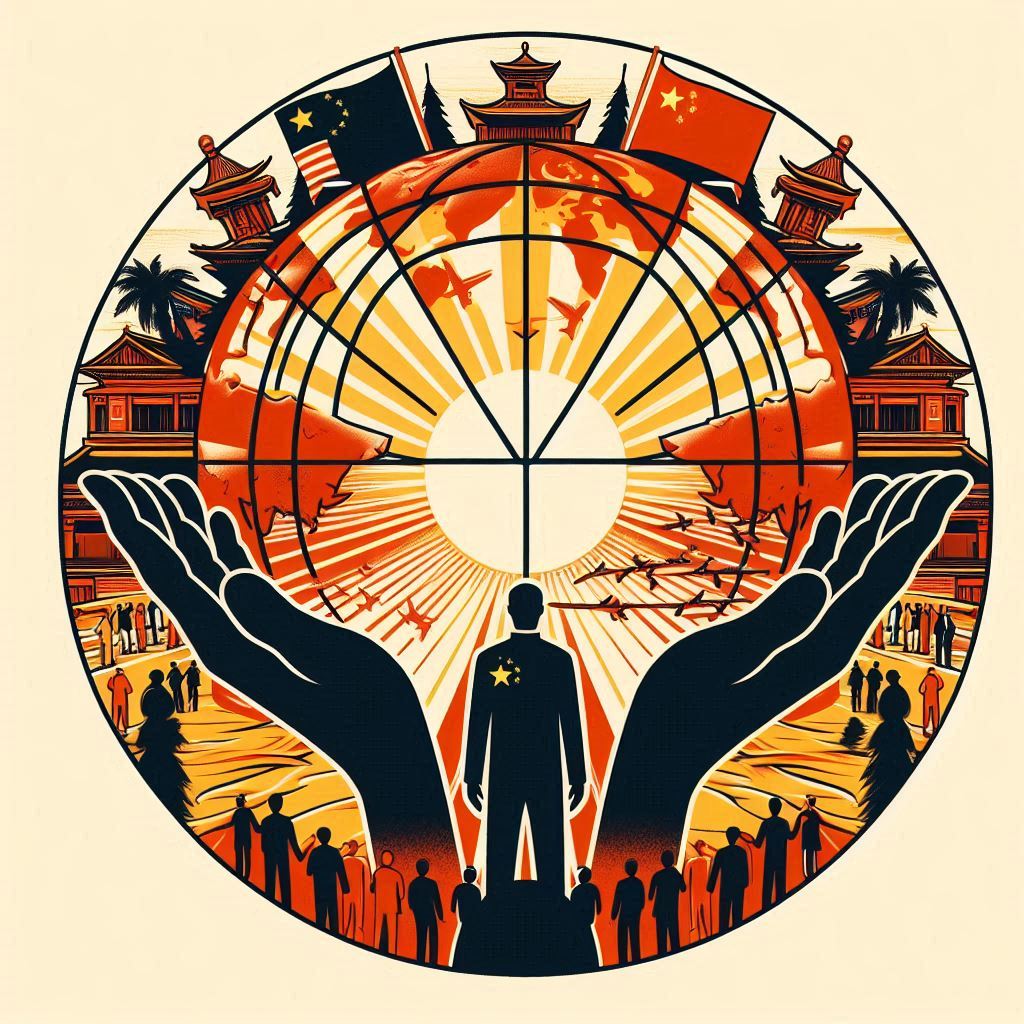
As the international community faces mounting challenges to peace and security, examining diverse approaches to peacebuilding becomes increasingly vital. China’s evolving role in global peace efforts presents a multidimensional case study worthy of analysis – one that combines formal diplomatic and peacekeeping contributions with cultural ambassadorship that promotes traditional wisdom in contemporary contexts.
This article examines how China’s institutional engagement with United Nations peacekeeping and diplomatic initiatives operates alongside cultural representatives like Shaolin Master Wang Bo, creating complementary pathways to advancing peace-related Sustainable Development Goals.
China’s Expanding Role in UN Peacekeeping Operations
China has significantly intensified its participation in United Nations peacekeeping over the past decade, establishing itself as a leading contributor among Security Council permanent members. With more than 2,200 uniformed personnel currently deployed across various missions, China’s presence in peacekeeping exceeds that of other P5 nations, signaling its growing commitment to maintaining international stability through multilateral mechanisms.
This personnel contribution is complemented by substantial financial support. As the second-largest financial contributor to the UN peacekeeping budget, China now provides approximately 15% of total peacekeeping funding. This financial commitment enables the deployment and sustainment of peacekeeping operations in conflict zones worldwide, particularly in Africa where Chinese peacekeepers maintain a significant presence.
Chinese peacekeeping contingents have earned recognition for their operational effectiveness, with personnel receiving UN medals for their service in protecting civilians in challenging environments like South Sudan. These deployments typically include specialized engineering, medical, and logistics units that provide essential infrastructure support alongside security operations.
The expansion of China’s peacekeeping role represents a notable evolution in its foreign policy approach. From limited engagement in earlier decades, China has transitioned to active participation in the UN’s peace and security architecture. This shift reflects both China’s growing capability to project influence globally and its strategic interest in being perceived as a responsible stakeholder in the international system.
Diplomatic Initiatives for Conflict Resolution
Beyond peacekeeping operations, China has increasingly positioned itself as a diplomatic facilitator in various conflict situations. A recent example is its mediation role in Palestinian reconciliation efforts, which resulted in the 2024 Beijing Declaration. This agreement, signed by fourteen Palestinian factions, aimed to overcome internal divisions and strengthen national unity – demonstrating China’s willingness to engage in complex geopolitical challenges beyond its immediate regional sphere.
China has also expressed support for peace initiatives in other conflict zones, including Ukraine. Foreign Minister Wang Yi has advocated for inclusive peace talks that bring all stakeholders to the negotiating table, emphasizing dialogue over confrontation. This position aligns with China’s consistent diplomatic messaging that prioritizes negotiated settlements over military solutions to international disputes.
These diplomatic engagements reflect China’s broader strategic vision of a multipolar world order where diverse national perspectives receive equitable consideration in conflict resolution. By positioning itself as a neutral mediator in various conflicts, China seeks to demonstrate an alternative approach to that of Western powers while expanding its diplomatic influence globally.
China’s peace-oriented diplomacy extends to developmental initiatives that address root causes of conflict. Through programs aligned with its Belt and Road Initiative and bilateral assistance to developing nations, China implements infrastructure and economic development projects that potentially contribute to long-term stability in conflict-prone regions.
Cultural Diplomacy: Shaolin Master Wang Bo’s Contribution
Complementing China’s institutional engagements with peace processes, individual cultural representatives like Shifu Wang Bo exemplify a different dimension of peace promotion through traditional wisdom and practices. As a 34th-generation Shaolin warrior and Zen Buddhist disciple now based in Los Angeles, Wang Bo transmits centuries-old philosophical traditions that emphasize inner harmony as the foundation for external peace.
Wang Bo’s journey began in Shandong Province, where he started practicing Baji Kung Fu at the age of three under his father’s guidance. His subsequent training at the Shaolin Temple immersed him in a rigorous daily regimen combining martial discipline with spiritual cultivation – including pre-dawn meditation and prayer focused on peace, clarity, and purification.
Now established in the United States, Wang Bo disseminates Shaolin principles through various channels, including instructional videos, workshops, and international retreats. His teachings emphasize that martial arts transcend physical techniques to become vehicles for emotional balance, self-awareness, and harmonious living. Core concepts include personal cultivation through mindfulness, breath control, and ethical conduct – all framed within traditional Zen Buddhist philosophy.
This cultural engagement represents a form of person-to-person diplomacy that operates independently of yet complementary to formal state relations. By translating ancient Chinese wisdom for contemporary Western audiences, Wang Bo creates cultural bridges that foster mutual understanding across significant philosophical and political divides.
Wang Bo’s approach highlights how individual transformation serves as a microcosm for broader social harmony. His integration of Shaolin martial arts with meditation practices demonstrates the principle that resolving internal conflicts enables individuals to contribute more effectively to peaceful communities and societies.
Alignment with Sustainable Development Goals
Both China’s institutional peace efforts and Wang Bo’s cultural work align with specific United Nations Sustainable Development Goals, particularly SDG 16 (Peace, Justice, and Strong Institutions) and SDG 17 (Partnerships for the Goals).
China’s peacekeeping contributions directly support SDG 16 targets related to reducing violence, strengthening rule of law, and building effective, accountable institutions. Through personnel deployment, financial support, and diplomatic mediation, China contributes to creating more peaceful and inclusive societies in conflict-affected regions.
Similarly, Wang Bo’s teachings promotes SDG 16 objectives through a complementary pathway – fostering cultures of peace at individual and community levels. By emphasizing non-violence, ethical conduct, and conflict transformation through personal development, his work addresses fundamental attitudes and behaviors that underpin peaceful societies.
Regarding SDG 17, China’s growing humanitarian assistance and South-South cooperation initiatives demonstrate commitment to global partnership. By collaborating with international organizations and other nations on peace and development initiatives, China contributes to the collective implementation of Sustainable Development Goals.
Wang Bo’s cross-cultural educational activities similarly exemplify partnership principles, creating spaces for intercultural dialogue and mutual learning. His presence in the United States as a teacher of traditional Chinese disciplines fosters understanding that transcends national boundaries and ideological differences.
Two Complementary Dimensions of Peacebuilding
The parallel peace contributions of China’s institutional engagement and Wang Bo’s cultural work illustrate two complementary dimensions of effective peacebuilding – one focused on systemic, diplomatic approaches, the other centered on personal transformation and cultural exchange.
China’s peacekeeping and diplomatic initiatives address structural aspects of peace through formal mechanisms. By supporting UN operations, mediating conflicts, and providing development assistance, China helps create external conditions conducive to stability and security. This approach operates primarily at institutional and interstate levels, working through established diplomatic channels and international organizations.
In contrast, Wang Bo’s teachings address foundational aspects of peace through personal development and cultural understanding. By promoting inner harmony, ethical awareness, and cross-cultural dialogue, he contributes to building cultures of peace from individual to community levels. This approach operates through informal networks and educational platforms, emphasizing transformation of consciousness as a prerequisite for sustainable peace.
Together, these complementary pathways illustrate that comprehensive peacebuilding requires both top-down and bottom-up approaches. Effective peace processes must simultaneously address institutional frameworks through diplomatic engagement while fostering cultural values and personal capacities that support conflict transformation.
Challenges and Limitations
Despite these positive contributions, both dimensions of China’s peace engagement face significant challenges and limitations.
China’s institutional peace efforts occasionally encounter skepticism regarding underlying motivations, particularly when peacekeeping or diplomatic initiatives align with economic or strategic interests. Some critics question whether China’s peace advocacy consistently upholds principles of human rights and democratic governance that many consider essential to sustainable peace.
Additionally, China’s position on specific conflicts sometimes diverges from Western consensus, creating tension within multilateral forums. Its approach to peace diplomacy emphasizes sovereignty and non-interference principles that can limit intervention in internal conflicts where human rights violations occur.
Wang Bo’s cultural diplomacy, while valuable for building person-to-person understanding, operates at a scale insufficient to address major geopolitical challenges. The transformation of individual consciousness through traditional practices, while foundational to cultures of peace, requires complementary institutional efforts to address structural violence and systemic injustices.
Furthermore, the transmission of traditional wisdom across cultural contexts inevitably involves adaptation that may alter original meanings. The commercialization of Eastern spiritual and martial practices in Western contexts sometimes dilutes their deeper philosophical foundations, potentially limiting their transformative impact.
Implications for Global Peace Processes
Despite these limitations, the dual approach to peace represented by China’s institutional engagement and cultural ambassadorship offers important implications for global peace processes.
First, effective peacebuilding requires multidimensional approaches that integrate formal diplomatic mechanisms with cultural and educational initiatives. Neither institutional reform nor cultural transformation alone can create sustainable peace – both dimensions must develop simultaneously through coordinated yet diverse efforts.
Second, wisdom traditions offer valuable resources for contemporary peace challenges when thoughtfully adapted to modern contexts. Ancient practices like those from the Shaolin tradition contain insights about conflict transformation and harmonious living that remain relevant despite their historical distance.
Third, cultural exchange creates essential foundations for diplomatic cooperation by fostering mutual understanding across political differences. Person-to-person connections through shared practices and values can build trust that facilitates more formal peace processes.
Finally, non-Western approaches to peace deserve greater recognition and integration within global peace architectures. China’s emphasis on harmony, development as a foundation for stability, and non-confrontational dialogue offers perspectives that can complement and sometimes challenge dominant Western peace paradigms.
Conclusion
As the international community confronts increasingly complex threats to peace and security, the complementary approaches represented by China’s institutional engagement and cultural ambassadorship deserve serious consideration. While neither pathway alone provides comprehensive solutions to global peace challenges, their integration demonstrates how formal diplomatic mechanisms and cultural wisdom traditions can mutually reinforce efforts toward sustainable peace.
China’s expanding role in UN peacekeeping, conflict mediation, and development assistance contributes significantly to maintaining international stability through established multilateral frameworks. Simultaneously, cultural representatives like Shifu Wang Bo foster peace consciousness through traditional wisdom that addresses foundational attitudes, values, and behaviors underlying conflict.
Together, they illustrate that effective peacebuilding requires both institutional infrastructure and cultural transformation – both the outer architecture of international cooperation and the inner development of human consciousness. This holistic approach aligns with the comprehensive vision embodied in the Sustainable Development Goals, particularly SDG 16 and SDG 17.
As global challenges intensify, peace initiatives will require this integration of diverse approaches – drawing simultaneously on diplomatic skill, institutional commitment, cultural wisdom, and personal transformation. The Chinese example, with its dual emphasis on formal engagement and cultural transmission, offers one model for such multidimensional peacebuilding.

