
There are places on this planet where the veil is thin — where suffering meets silence, where corruption lives in plain sight, and where the soul of a society is tested. These are not places most choose to look. But they are the thresholds through which true transformation begins.
It takes a particular kind of power to walk into these realms. Not force. Not dominance. But something sacred — a fire forged in truth, a resolve born from seeing pain and choosing not to turn away.
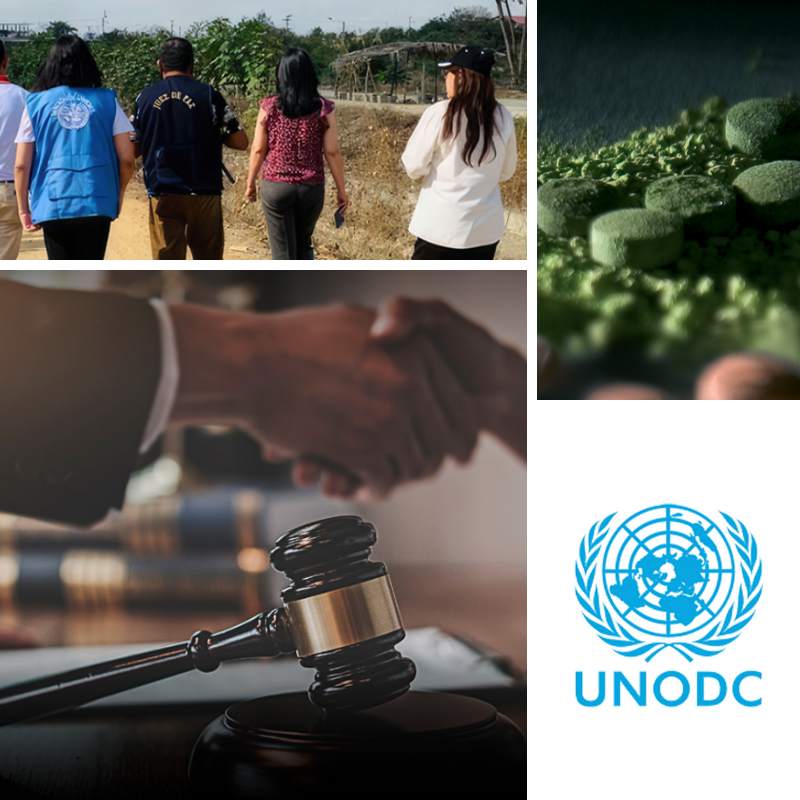
This is the rare work of the United Nations Office on Drugs and Crime (UNODC).
While often defined by its technical mandates — countering organized crime, addressing corruption, combating human trafficking, strengthening criminal justice systems — what UNODC truly offers is something far deeper: a path of global transmutation.
It works in the darkest corners of society — and helps those corners begin to turn toward light.
A Ministry of Shadow Work
UNODC’s mission brings it face-to-face with some of the most soul-wounding patterns of our time:
Children sold into slavery.
Women trafficked across borders.
Entire economies built on silence, extortion, and stolen futures.
Legal systems weaponized against the vulnerable instead of protecting them.
Yet through all of this, UNODC does not flinch. It investigates, intervenes, and rebuilds. But it also listens — to the pain beneath the violence, to the systems beneath the symptoms, to the humanity still buried under layers of power and trauma.
This is not policy for the sake of paperwork. This is alchemy. The slow, fierce process of healing institutions, cultures, and individuals from the inside out.
Transformation at the Threshold
Where other agencies bring aid, UNODC brings initiation. It challenges governments, law enforcement, and civil institutions to walk a new path — one of integrity, clarity, and justice.
In doing so, it supports:
The creation of anti-corruption commissions and judicial reforms.
Survivor-centered approaches to human trafficking and gender-based violence.
The reorientation of prison systems toward rehabilitation and reintegration.
Global cooperation against cybercrime, terrorism, and drug trafficking — using intelligence grounded in both compassion and strategy.
But the heart of its work is transformation: from extraction to ethics, from fear to awareness, from harm to healing.
UNODC offers nations a mirror and asks, What kind of world are you willing to protect?
UNODC in Action: A Sacred Intervention in Human Trafficking
One of UNODC’s most profound areas of impact is in the global fight against human trafficking — a shadow system that violates the sacredness of the human soul.
Through partnerships with governments, NGOs, survivors, and faith-based organizations, UNODC leads efforts to:
Dismantle trafficking networks.
Train border agents, police, and prosecutors to respond with trauma-informed care.
Protect victims not only legally, but emotionally — offering safe spaces, therapy, vocational healing, and community.
Its Blue Heart Campaign invites the world to see trafficking not just as a crime, but as a global wound — one that can only be addressed through truth, compassion, and international cooperation.
This work is not about punishment alone. It is about restoring wholeness where people were fractured — and honoring the sanctity of every human life.
The Power Behind the Power
What makes UNODC unique is its relationship to power. It does not seek to dominate — it seeks to transform. It teaches institutions to use power not as control, but as protection. Not as dominance, but as devotion to justice.
This is spiritual work dressed in legal language.
Its programs empower judges, prosecutors, civil servants, and even formerly incarcerated individuals to rise into new roles — as protectors of light in systems once cloaked in shadow.
It doesn’t just ask systems to evolve. It helps them remember who they were meant to be.
Mystical Work in Modern Clothes
There is something deeply mystical about UNODC’s work — not because it is esoteric, but because it dares to deal with what others suppress.
To address human trafficking is to address the commodification of spirit.
To address corruption is to confront the distortion of power.
To address drug abuse is to see the soul behind the suffering — and help it return home.
This is modern shadow work on a planetary scale. And it takes more than laws to do it — it takes vision, resilience, and a sacred vow to truth.
In Closing
There are paths we walk because they are easy. And then there are paths that demand everything — clarity, courage, compassion, and the willingness to be changed by the journey.
UNODC walks the latter.
It serves not just justice, but transcendence through accountability. It dares to enter the darkest corridors of our global systems and ask: What if this could become sacred again?
What if power could purify?
What if systems could serve?
What if pain could be transmuted, not buried?
In a world too often afraid to face its own shadow, UNODC reminds us: Transformation begins where denial ends. And light rises from the places we’re willing to heal.

